Libby Ballengee is an arts entrepreneur, community cheerleader, and the force behind countless live events in Dayton, Ohio. She serves as the music booker and promoter for The Brightside Music & Events Venue and is the founder of Venus Child Productions.
In this episode, Libby shares more about her creative path, her passion for volunteering and community impact, and the future she wants to create right here in Dayton.
Listen Here:
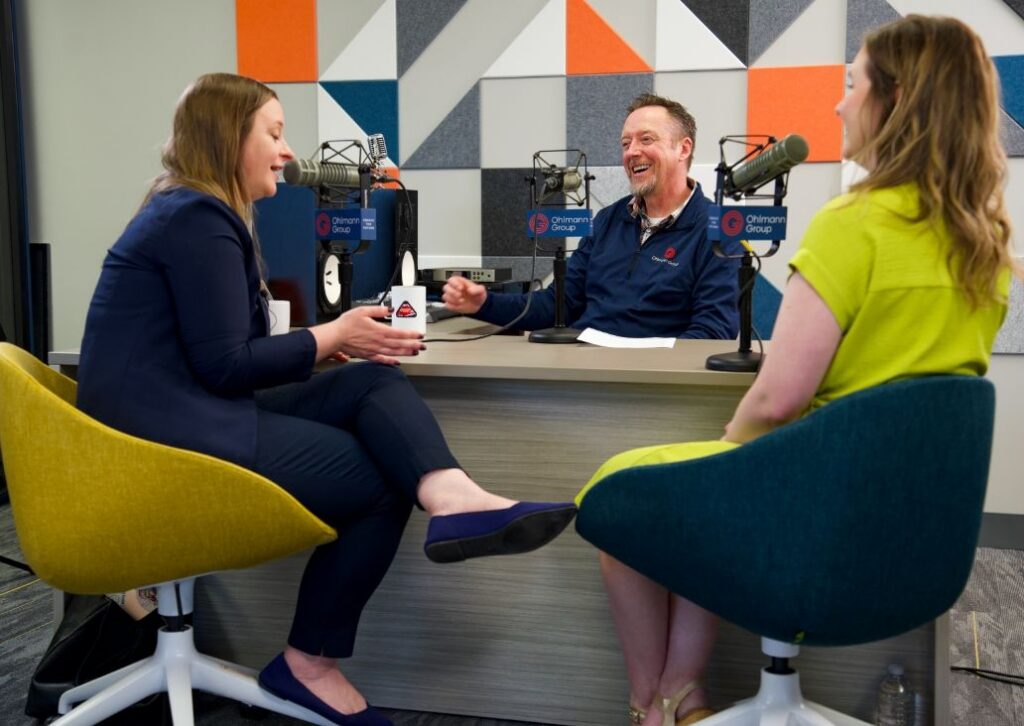
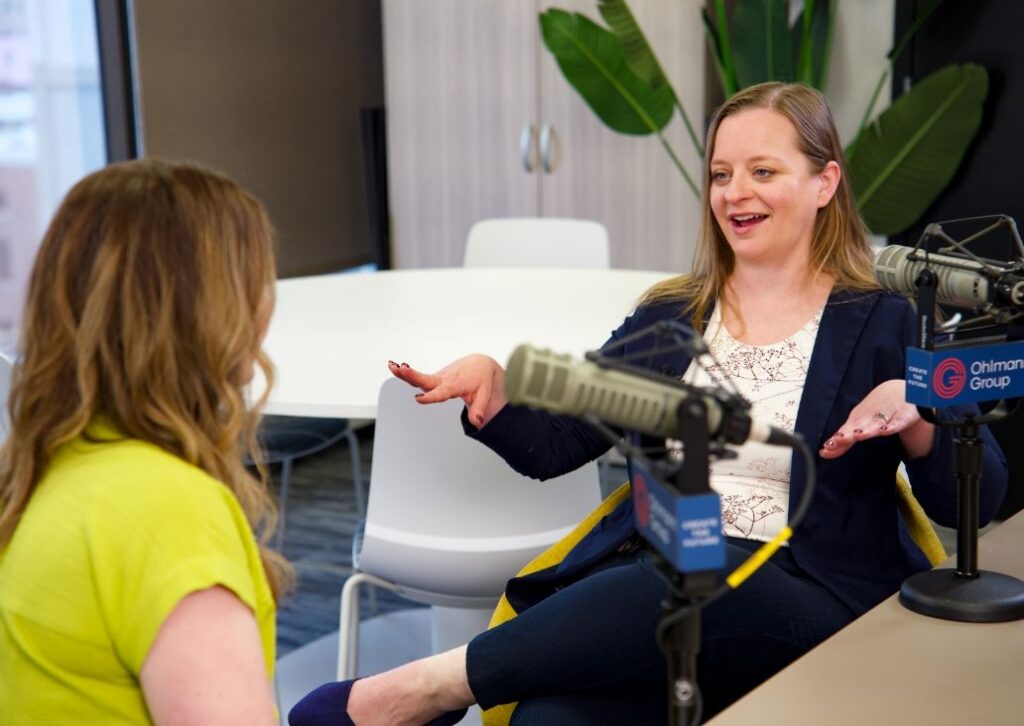
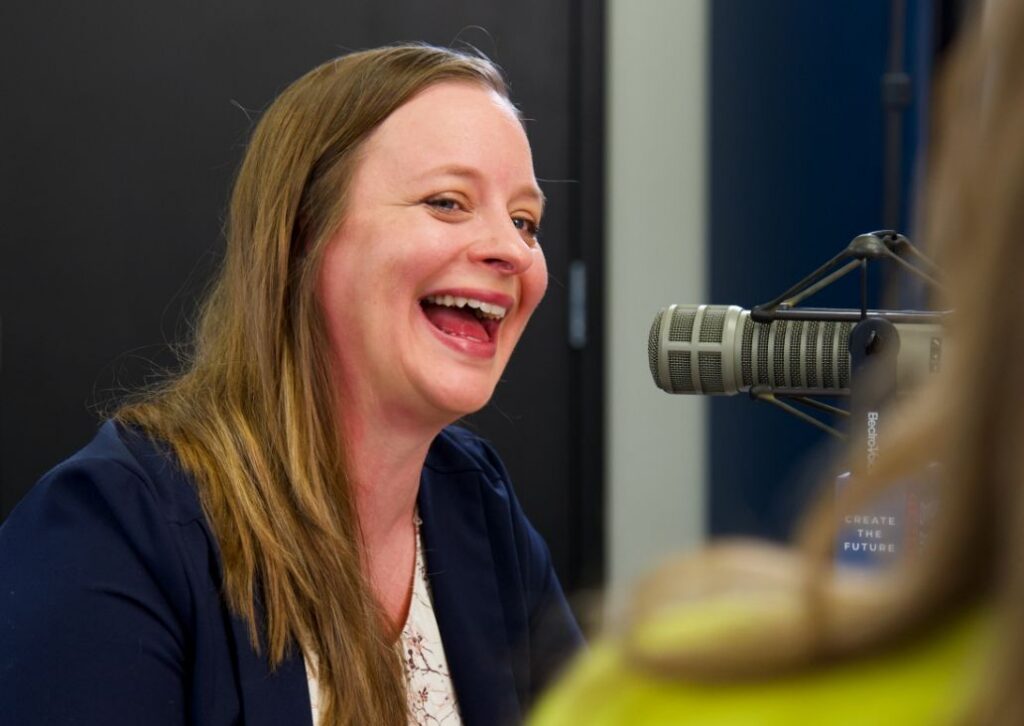
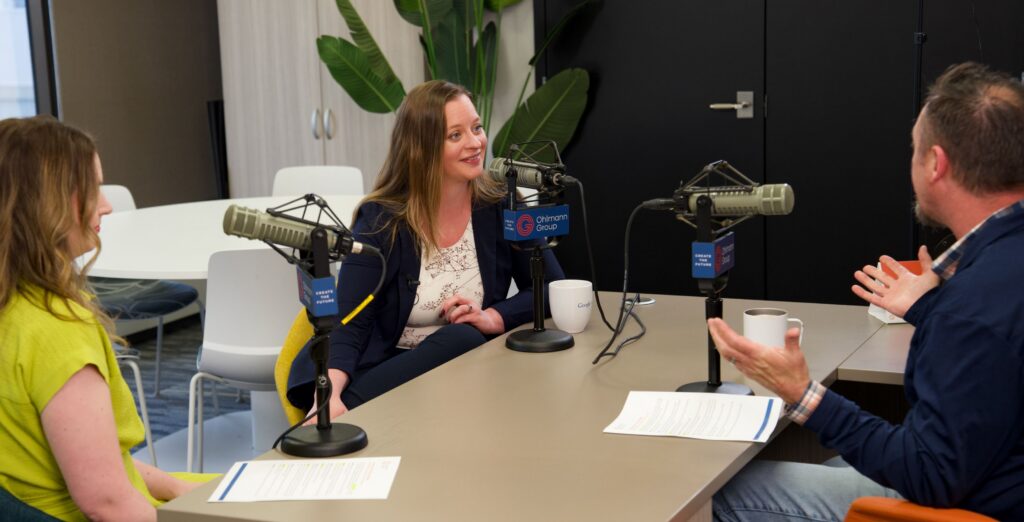
Episode Transcript:
David Bowman:
Welcome to Creating the Future. I’m David Bowman
Evelyn Ritzi:
And I’m Evelyn Ritzi
David: And today we’re joined by one of the biggest advocates for the city and the force behind countless live events in Dayton, Libby Ballengee.
Libby Ballengee:
My gosh, what a generous intro. Thank you so much. I appreciate that. Thank you.
David:
Thank you for joining us today. We’re so excited to have you. So we would love to start with you, with you and your story. And just could you share a bit about your background and your career journey?
Libby:
Absolutely. so I grew up in Brookville. If you’re familiar with Brookville, it’s a little bit like west of Montgomery County. I feel like it’s just this rural kind of off the off the grid. People in Dayton are like, Are you talking about Brookville, Indiana? I’m like, No, like there’s a Brookville, Ohio. It’s in Montgomery County. but I grew up pretty rural. my parents are actually originally from West Virginia, very like deep Southwest Virginia in the Appalachian Mountains, very close to the New River Gorge area. And
So they came here for jobs and it’s funny because in their perspective, Dayton was like Manhattan. there was so much to do, and they really wanted to take advantage of it. So they started buying tickets to for me to go see the ballet when I was four years old. I’m like a subscriber to the Dayton Ballet since 1981. my goodness. and they just, you know, they had so little to do in the mountains that they were very excited for me to experience all of
What Dayton has to offer. And then when I got older and realized people thought Dayton was kind of backwards, I was like, it’s really relative, you know? and all of these places are what you make it, you know. You’re if you’re bored, you’re maybe a boring person. but I always thought Dayton had a lot to do. And I remember watching the children’s parade from her office window and just thinking like this is just such a magical place. and then like when the Great Recession hit, I felt like there was a lot of arts organizations that were really struggling. obviously that was a hard time.
And I started volunteering for the Dayton Ballet and did a lot of like promotional things and I feel like that’s kind of where things sort of like kind of took off. I was originally my career was in educational publishing. I worked at Mazer, if you remember Mazer. Yeah, yeah. so that was kind of my day job, but I just became sort of an avid volunteer for a lot of different groups and then that sort of turned into kind of more of this like what you guys are doing right now, more of a storytelling role. I was involved for seven years with the Gem City podcast. So I’m very familiar with the format. And then I started doing a Dayton Music Insider blog for Dayton.com when Dayton.com launched. Did that for several years. And been on and off a writer for Dayton Daily News, and then I also now do a monthly event guide for Dayton 937. So it’s just kind of always been promotional and just trying to kind of educate people that there’s a lot to do in Dayton. and then that eventually led to me actually producing events myself. So I’ve done that under my business being Venus Child Productions, but the main vehicle for that is the Brightside.
David:
Woo woo.
Libby:
Yeah. But that’s had lots of little splinters off of that. Dayton Battle of the Bands, I’m involved in Dayton Porch Fest, Yellow Springs Film Festival, close to my heart. So
Lots of different events, but that’s kind of in a nutshell how I got here.
Evelyn: That’s that’s so amazing. You’re just one of those people that just raise their hand and said, I’ll I can do it, I’ll volunteer.
Libby:
My mom I definitely get that from my mom. My mom was you know, in retirement kind of at everyday the the week. I’m selling raffle tickets for this.
Evelyn:
You wear so many different hats in the community, the arts, music…Let’s touch on the Brightside first because people may know you best from there. Could you kind of talk about why these independent music venues are so so important for a city of our size?
Libby:
Absolutely. Well, they’re becoming honestly kind of an ext like kind of going extinct, unfortunately. I just saw a independent venue in Milwaukee closing. you know, right now Live Nation has made it really tricky for this this kind of independent venue to survive, but costs have gone up exponentially. you know, COVID ha after COVID, habits have changed. People are going out earlier, less often, definitely drinking less. That’s for a variety of reasons. but it’s really changed like the business model, but they’re so important because that’s the pipeline for artists. You know, you don’t jump from like playing in your garage to being a live nation artist. Like you do need these rooms, like going to a bar, going to a mid-sized club room like ours, and like
You know, that’s how Imagine Dragons and like all the, you know, camp and all these bands, that’s how that was the funnel to to how they got there. So, you know, for for Dayton musicians, if we want to see them get to play the Rose or we wanna get them to, you know, US Bank Arena or wherever, they’ve got to start at these these club rooms. So it’s definitely really important for us to to have these spaces. And also just in general, third spaces I feel like are really kind of disappearing.
We have a DIY room now that we’ve developed in the last couple of years and younger people, I’m not calling them kids. younger people are using it and I just love seeing them have their own space that they can kind of call their own and they feel comfortable in and so that’s been really cool as well. But yeah, I definitely feel f just for independent artists that they’ve got a space that they can work on their craft and come see it. but yeah. I think they’re so great too, you know, broadly speaking, as sort of a category, right? Independent, small, independent local venues are always unique. so you get a music experience that’s not sort of homogenized. It’s super intimate.
David:
So you’re, you know, that’s the best concerts you can go see. I remember back in the day, Canal Street Tavern used to be the place to go, and you would, you know, see these indie bands that you know eventually they would be big, but they would stop there and they weren’t, and you hang out with them after. Show or just you know, do stuff, right? And it was just really cool.
Libby:
Exactly. and I think that’s just such an important part of like the musical ecosystem, even beyond just like, hey, going beyond to play bigger venues, etc. Like that if you’re asking me, like that’s where I want to see a band is when they’re young and hungry and you’re up close and personal, and like, you know, it’s not completely polished and high dollar perfection, it’s like personal.
David:
Call that the campfire vibe. Yeah, exactly.
Libby:
And it’s such amazing energy too. Like the energy exchange is just awesome. And you said ecosystem, and I definitely believe that. Like it’s so cool that we saw like this summer, the Levitt Pavilion. I think there’s like eight bands that were part of our battle of the bands that are like openers this year, like Levitt. And so I definitely I just like love seeing bands like get to like move, move on and like get to bigger stages. So that’s been a real joy.
David:
Well what’s something that people might not realize about like booking artists, producing live events? What are like well boy if you only knew like this is what it’s really like.
Libby:
I would say probably what’s surprising, particularly at our capacity, which is around six hundred standing in the ballroom, is that we basically make no money on tickets.
David:
Wow.
Libby:
Yeah. I think there’s a perception that like there’s like all this money being made. But for a band to actually sell that many tickets, typically they’re getting a larger dollar amount or percentage of the tickets. So most of the ticket sales are going to all the costs of the show. So that’s everything from the artists themselves, the sound and lighting people, the security, marketing, the parking kids, just everybody that’s supporting making that event happen. so most of the time I’m actually praying to break even. I just went through that and I was like skin of my teeth.
So what we’re really as a venue making is actually off of bar sales. We don’t have food sales. So that’s something that people sometimes don’t realize is the difference between Brightside and like let’s say Oregon Express or Blind Bobs is like they’re also restaurants. They’re selling food. Right. They’re open anyway. I’m not open anyway. So every single person is working for an hourly wage and has to be there. So sometimes people get a little upset with me when I’m not booking them and I’m like, it’s like minimum four hundred dollars to open the doors. Like, do you know what I mean? Even for the littlest show.
But you know, obviously the the drinking, which is great for everyone’s health and I love that, but that that model of we’re gonna make just the bar sales has been really challenging. So I’m kinda having to like tweak things. most recently selling reserve tables at a higher rate has really helped me like be able to cover production costs and maybe even like pay for myself a little bit.
But yeah, so it’s definitely it’s a it’s a labor of love. and we we still try to kind of keep that bar model and we’re always like tweaking it. but that’s again kind of to where like those independent venues are really having a hard time, like with this whole new dynamic. So we’re trying to be as inventive as we possibly can to keep it going. Yeah.
Evelyn:
At the same time you go to a concert in a a really large venue and it’s astronomical prices. So it’s like I would much rather prefer going to a smaller venue that I know the person who runs it.
Libby:
Yeah. I think And I know where my dollars are going back to the community. Like I think part of it is like now that’s like kind of cycling back. Like you see right now like all these like large stadium tours are starting to cancel. Yeah. And I think people are just, you know, it’s five dollar gas. People are like, I’m just not gonna I’m not gonna do that anymore. And I even think like artists like, hey, I wanna start to play small rooms again. So I’m hoping that trend kinda circles back around an
But yeah, it’s a roller coaster. Yeah. Yeah. It’s definitely.
Evelyn: And there’s a lot of other events you all do at the Brightside too, beyond music, right?
Libby:
we do private events definitely pay the bills. So if you’re planning a wedding, a corporate event, we would love to host you. That definitely helps us maintain all this other fun stuff. but we have Dayton Dinner Theater, we have food truck rallies, we’ve got a clash fashion show coming up. so a lot of different community events than just just the music, which I think is really cool and the audiences really like that variety as well. So yeah.
David:
I’ve been there for everything from Wright State was getting ready to go to the first four and there was a big party to AAF Dayton Storytelling events.
Evelyn:
Story slam.
Libby:
Story slam. my gosh, we’ve got one coming up. Yeah. So fun. Yeah. So we tried PK, lots of stuff like that. So yeah.
David:
So as a music fan, could you tell us a little bit about your personal taste? what bands do you love? Or it could be local or you know, famous folks. Absolutely. well, I am definitely personally a kind of a jam band girl. My first concert was The Grateful Dead, so I was indoctrinated. And but I go see Phish with my husband and our like college friends and stuff. Yeah. so that’s kind of like a like a summer staple is going to see Phish. But locally I’m a huge fan of Crabs Without Legs. I don’t know if you’ve seen them.
Evelyn:
I was at your holiday show.
Libby:
Yes, yeah. but they’re like such an inventive, like jazz fusion band, twelve piece jazz fusion band. and they’re all so young and talented, they’re all like music theory majors and a couple of them went to Stivers. and they’re just they’re awesome. I love them. But I I am like I know everyone’s like I listen to everything. But I’m really I like rock, I like funk. I mean one of the reasons that I actually even started to promote was because so much of the shows and I’m not saying this is like a judgment, but like so much was like really heavy noisy rock, which like Dayton is sort of known for Guided by Voices and all that and I love it. But it was just like sometimes I just wanted to go out with my girlfriends and dance and like we’d have to go see like funk bands and like or jam bands in like Cincinnati or Columbus and I’m like, my gosh, I just don’t want to make this drive anymore. So like yeah, somehow that seemed easier to throw my own shows. I’ve I’ve discovered that it’s not easier. Yeah, and I’m not like now I’m not at the show. but anyway, so a lot of it is a lot of what I book is is a lot of my personal taste too, like these are the shows I wanted to go to.
David:
Yeah. You mentioned, you know, Guided by Voices, part of the the musical tapestry here, along with, you know, tons of other bands. And also the the funk scene that, you know, funk was a big hunk of it born here. Absolutely. Northwest Dayton. we’ve got such a vibrant like art scene, creative spirit. So from your perspective, what makes this particular community a special place for artists and musicians?
Libby:
You know, it’s funny, I just had a concert on Sunday, JD Simo and Luther Dickinson, and they they may not be like familiar names to like audiences, but they’ve performed with, you know, Jack White or Jack White, Beyonce, the ones that currently in Chris Isaac’s band. Like they’re kind of, you know, sort of like hired guns and like all these other bigger bands. but they perform together and it’s kind of a musician’s musician show. And they’re on a tour and every other city sat completely for the entire show. Like no one stood. No one. And the Dayton show, they were like Chester cats up there because everybody in Dayton flooded to the front. They were dancing the whole time. They loved it. They played 45 minutes longer than they were supposed to play. my gosh. They were having so much fun. And they were like, this is the best stop of the entire tour, like bar none. And you know, there’s part of it that I’m like, you know, because we don’t have, you know, Canal Street and Gily’s and so like we’re kind of starve for it, you know, so it’s like, my gosh, you know, throwing meat to the starving kind of thing. But it’s also like, I just think that we’re such music lovers here and we’re just such art lovers. so I think that that makes this community special for sure. but I think it’s also like everybody supports each other, like the DPAA, like the ballet and the opera and the philharmonic combine. And I just saw a wonderful program, American Soundscapes. With the new conductor Katara Harada. And just like such a classy way to combine all three art forms. And I think in some bigger cities, sometimes those art forms get siloed. Yeah. And everyone kinda gets so I just love all the collaboration in the city and just like how excited we get when cool things happen. So yeah, so that’s why I think it’s special.
David:
It’s something else you mentioned too, that’s just a great thing about seeing a band at a small venue. They played forty five minutes extra. Right. You don’t go to like the giant arena and yeah, you know, you might get an extra song. Yeah. but you’re not gonna get like, Hey, we’re just having a good time and we just wanna keep doing this because it’s fun. Yeah, exactly. Which is just amazing. Like
Libby:
My gosh, it was so everyone was like buzzing like out of the building and and I’m just really grateful for everyone’s trust. They’re like, Who are these people? And then when they came, they’re like, my gosh, I’m so glad I trusted and you came to this. So I really appreciate that a lot. Yeah.
Evelyn:
So as if you didn’t have enough to do, one of the ways that you, you know, share your love for your hometown is through Dayton 937, which is another platform that you have. For those who aren’t familiar, tell us what Dayton 937 is and how it helps connect people to what’s happening around town.
Libby:
Yeah, absolutely. Dayton 937 actually used to be called Dayton Most Metro. Yeah. And it was actually birthed out of one of the UpDayton summits. And Lisa Grigsby still runs the digital side. It was rebranded, I think post-COVID to Dayton937.com. I think just for ease of finding it, Dayton Most Metro. I know if that was necessarily kind of comes to mind. But yeah, so post-COVID, you know, it was just really hard to get people out, obviously. And so in June of 2021, Lisa and I decided, you know, because we didn’t have the Dayton City paper anymore. I looked into newsprint and it’s terribly expensive. So kind of understand that. And so it’s like, what is the cheapest way we could have some print form of this? And so an eleven by fourteen pie piece of paper printed on both sides that’s folded up like a brochure. And that was our solution. Lisa thought that people would just walk by it if it was just white. So it is fluorescent green, kind of close to your dress color right now.
David:
She’s speaking to Evelyn, by the way. For those listening. My dress color’s blue.
Libby:
Just in case you’re and so we just kinda pop them around town and it’s just really like a listing of events that are going on. Usually like there’s music, festivals, kind of food, and other special things that are maybe going on specifically that month. I’ll tell you who really loves those is hotels. yeah. The hotels are like waiting at the door. Because I think from like a concierge standpoint, it’s you know, if you’ve got people in from out of town and you’re like, What’s going on? I’m not sure that the people working the front desk are ready to just so they pull those out of the behind the desk, especially the ones downtown. And so they definitely find them really helpful. But we’ve had people reach out and they’re like, Thank you so much for you know, making this. So I’m definitely the print person. Right. So you know, I was doing so many flyers that it was like, well, I could just combine them into one. So it was also an efficiency thing for me. Mm-hmm. There’s so many events happening in Dayton. Like people have no idea. Like it it’s a good service that you have. Thank you. It’s it is like it’s an ongoing challenge that, you know, I know people just love to say nothing’s happening, but you just gotta look just a little bit. It’s not even really too hard. But come to Dayton nine three seven dot com to check different categories and stuff, but as people who are producing events, please enter your events and community calendars. I know it’s kind of a little bit of a can be a little challenging, but it really helps and that’s how we pull those events. so it’s really helpful.
David:
What specific community calendars people should be going to to enter?
Libby:
I definitely think Dayton 937. There you go, you know, if you’re downtown, the the downtown Dayton Partnership one, the Dayton Daily News, WISO. Yeah. Are some good ones for sure. I actually use I’m gonna plug a a business, but I use a a service called Event Vesta. And I can put my event there and they actually populate it in like twelve community calendars. That’s great. Yeah. Yeah. And like different like Springfield and Miami County and like different places, so it’s It’s been a real time saver for me.
David:
I just go to Facebook and figure out what what you or Lisa are doing and then that’s
Evelyn:
Yeah, yeah, or just follow Libby on Facebook.
Libby: It’s become just like a public page at this point, like my my personal page. yeah.
David:
So what advice would you give to creatives, entrepreneurs, people who want to build something meaningful in Dayton?
Libby:
Absolutely. I think showing up for other people’s events and work is really, really, really important. I tell that to people all the time. you know, I see sometimes people complain about like, people didn’t come to my event. I’m like, I never see you at anything. So like, you know, like be generous with your time and like and support other artists. and, you know, volunteer. I would say people are like, How are you so connected? I’m like, I I volunteered constantly. So
Again, that kind of goes back to that like generosity piece and just being just be involved. Like go to thing, you know. I’m like, people are like, How do you know? I’m like, I’ve been going to concerts and stuff since I was fourteen. And, you know, I won’t date myself, but you can imagine. So I’m like, I’ve been going, you know, for like 35 years to stuff. And it’s like, you gotta just kinda put yourself out there. but Dayton is absolutely such an like an accessible place to make your mark. Like I think some bigger cities, it’s just really tricky. It’s like
There’s so many gatekeepers and so many people that are, you know, already doing these things. And Dayton, it’s like if you just put yourself out there, it’s kind of like a, you know, like a blank chalkboard. Like you can, you know, write your own story here. So just put yourself out there for sure. and there’s lots of opportunities. So yeah. Dayton Porch Fest is one. that’s one where it’s like, you know, unfortunately I have to say no a lot of times to people who are, you know, and I’m like, hey, apply for Porch Fest, get out there, let me hear your music.
And then maybe that’ll lead to a show. Same with Battle of the Bands. Those are all kind of like audition points for me to kind of see see what people are doing, especially on the music side. So that’s just such a
David:
Such an awesome event. my god. Great neighborhood, great entertainment.
Libby:
If I could make it permanently 78 degrees. I know it sometimes gets a little warm. But yeah, thank you so much. It’s been it’s been fantastic working with Peter on that.
Evelyn:
So well you clearly pour so much of yourself into your work and as a volunteering and community involvement. How do you stay inspired and avoid burnout? ‘Cause I would have to imagine that may be a challenge.
Libby:
My gosh, burnout is definitely a challenge for sure.I’ve really, really, really like as you can tell, like I’ve really had a hard time over the years saying no. It’s such a skill to learn and I tell younger people I’m like, if it’s not a hell yeah, it’s a no. And that’s been a hard lesson to learn. but yeah, I’m still I’m still working on that one. ‘Cause you know, you feel like a sense of obligation and you know, and people are genuinely, you know, I’m doing this for charity, you know, and it’s like it’s it’s hard. So I just have to like really know my boundaries. My husband and and my dog are very helpful with my boundaries.
Evelyn:
Well the what is your dog’s name that you bring to the shows?
Libby:
Misty. So Misty makes an appearance in a little bag. So cute. So I get that, yeah. Yeah. So they help me kind of keep myself grounded and not working twenty four seven. So that’s been good. But learning that rest is not being lazy is so hard for people like us, I think. And
David:
There’s a great book I read called How to Do Nothing. Yeah. Which was like, hey, that’s a revelation to me.
Libby:
Yeah, I know. I know. For me too. Like there’s such a I don’t know if it’s like a Gen X thing or it’s like this, you know, just I don’t know, something got put in my brain that, you know, if you’re not doing something constantly, you’re, you know. Yeah. We’re not we’re not being productive. And so, kind of deprogramming that has been definitely very important, but
I definitely go in and out of burnout for sure. I we kind of at Brightside have sort of almost like a performing arts season, like kind of like a school year season. there’s so many great outdoor pavilions in town. Frays and Love It and Rose, that I’m like, you know what, we’re gonna lean into wedding season. And so summer is actually ironically a little bit of a break time for me. So most of my shows are like, let’s say, mid-September through like the end of May. And so I am I’m winding down and I definitely need the break. So I’m I’m very excited for a slow summer. Good. And you feel like you can sit in an audience and relax, or are you kind of examining what’s going on? It’s a it’s hard to I like I just went to see David Byrne with my with my husband in in Indianapolis and I do like kind of getting out a little bit because like I can be completely pretty anonymous and like not talk to about like, Hey, can I book your sh I’m like, I’m on off time.
But yeah, like I was pretty able to relax, but it is, you know, sometimes it’s hard to not like look at the production crew and like what’s going on back there. there was an amazing show. It was the Foo Fighters, David Grohl with Nine Inch Nails and the Breeders, and they did this big veterans event. And we had side, like we were on the side of this kind of big like arena.
And so we saw all the backstage stuff and how they were wheeling in and out all the drum kits and I was just like I couldn’t focus on the show. I I was just watching the whole thing. But especially if I’m with my husband, I try to just be like, We’re in the moment. Right. I’m at the show. I’m I’m not I’m not watching how they’re changing out the bands.
David:
any concerts on on tap for the summer that you’re excited about?
Libby:
I’m definitely doing Phish Deer Creek, which I’m excited about.
David:
Like that you still call it Deer Creek. yeah. Which is what you have to call it. I don’t even know what it is; it’s something else.
Libby:
It’s changed names so many times, like different corporations. So I’ve like I’ve lost track, but the real ones still call it Deer Creek. I’m trying to think of what else we have tickets for. I just went to the sphere.
David:
Someone here went as well. It was her first Phish concert, so
Libby:
That might have been a lot. Yeah. I’m looking forward to going to some of the like definitely going to the some of the Levitt stuff. We’re the sponsor, like one of the sponsors of the Reverend Peyton, Paid Leave is opening, which was our Battle of the Band winner. so I’m excited about that. But I’m still I’m still plotting out still plotting out my summer stuff. So I’m gonna see. We’ll look for it in the latest edition of Dayton 937. Yeah, I’m excited.
David:
Exactly. So one final question. We asked this of all of our guests. What’s the future that you want to create?
Libby:
You know, I think one of the things is that I would like to create something that’s not I’m thinking about things a little bit more long term than short term. Like I want things to be here that are like outliving me. Do you know what I mean? Whether it’s like the bright side or the DIY room for like the young people. but yeah, just thinking about you know, what kind of I don’t know, I guess for lack of a better term, like legacy, like we’re leaving.
but I would love for like the arts and culture for it to shift from being something that’s nice to have to something that’s essential to have, like a real economic driver in the city. I think sometimes it’s it is kind of a little bit like, that’s nice. But I really think like every single concert, you know, we have we have concerts here where people are like, What hotels do we stay at? And what you know, and it’s like it we really are bringing people here to eat at restaurants, to be at hotels and
The thing is is like you don’t think about a city as like, my gosh, they had a great office building. I mean, you do have a great office building. But but that’s not what you carry away. Like you carry away that you had that amazing experience with that indie band and you, you know, you had that great, you know, meal at Sueno or you, you know, like the arts and all of this, it’s like it’s the heartbeat of the city. And so just trying to keep it alive. I mean, it’s really hard with funding right now, obviously, but doing everything we can to just
support, lift it up, promote it, all those things because if we didn’t have all this stuff going on, it would just be like it really would be a boring place to live, you know. and I mean sports are definitely a fun thing too. I love the flyers, you know, but you gotta have a mix of stuff, you know? And as someone who wasn’t a sports kid, I, you know, I really appreciate having all of these great arts organizations and like there’s big cities that don’t have an opera.
You know, I remember hearing, you know, San Diego Opera is going out of business and like all these things. So I just think we tend to really take these things for granted and there’s no law that says all these places have to be have to be open. So I just always tell people like, please buy tickets. Like, I know that that season has really cut down and people are really upset about like the Philharmonic, like cutting down on their season. And my answer every single time people bring it up to me is like, please buy a ticket. When’s the last time you bought a ticket? And Please buy tickets in advance. I’m sorry, I forgot to mention that. Please buy tickets in advance. Like, especially a bright side, we make decisions on what room we’re gonna put things in, how many bartenders are we gonna cancel the food truck. so like the price I want you to pay is the pre-sale price, the door price is a punishment price. People don’t understand that. It’s like like don’t make me live on pins and pens and needles. Let me know you’re gonna come because we cancel shows. and the same thing with in these larger arts organizations. You know, buying a ticket is a vote for the city you want to live in. So just please think about that when you’re thinking about the city, the city’s future.
David:
Well thank you for all that you do for our city. And thank you for being our guest today.
Libby:
Absolutely.