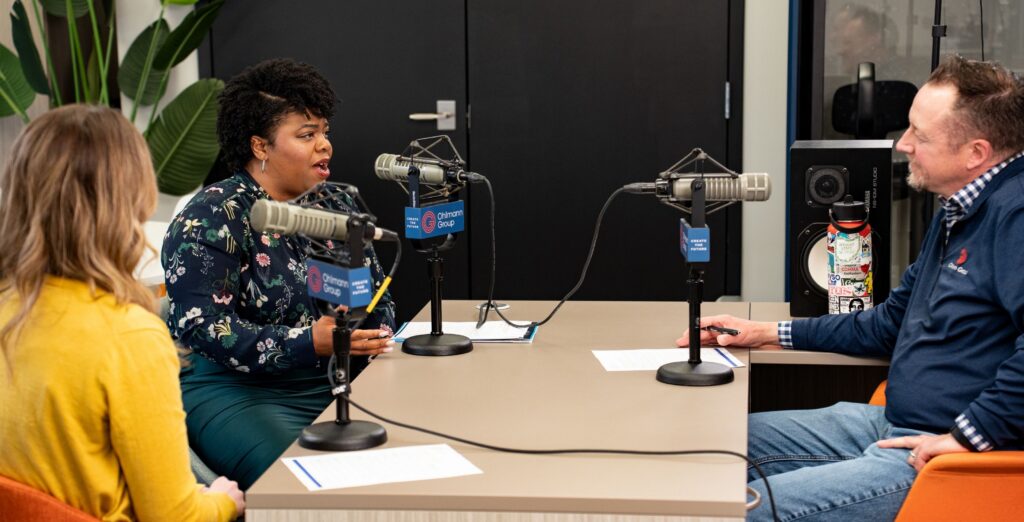
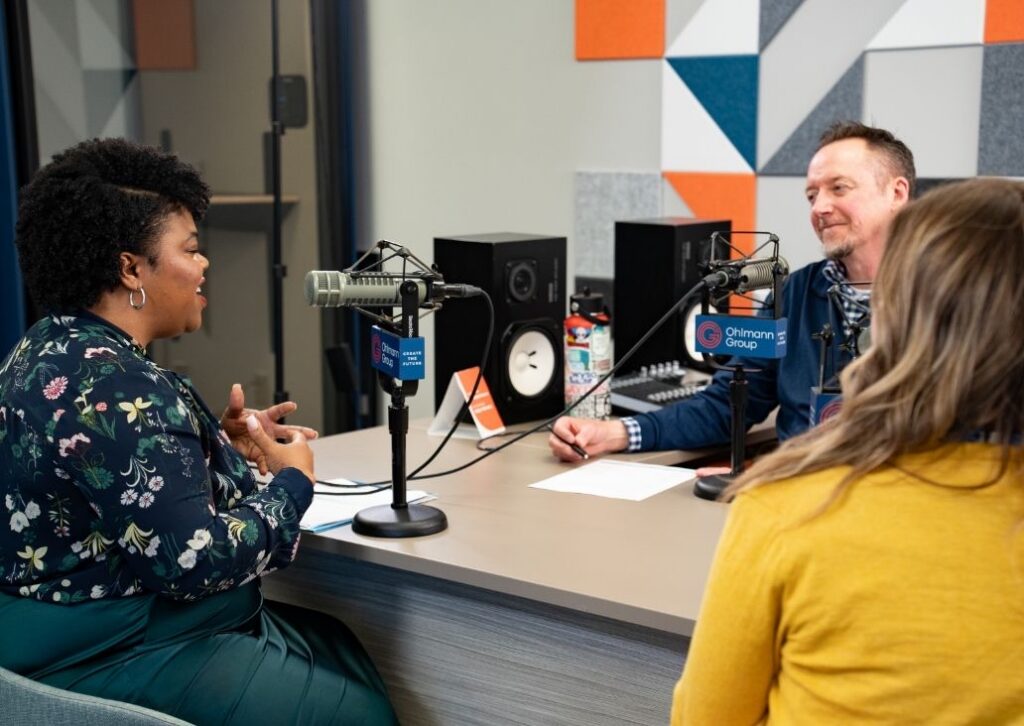
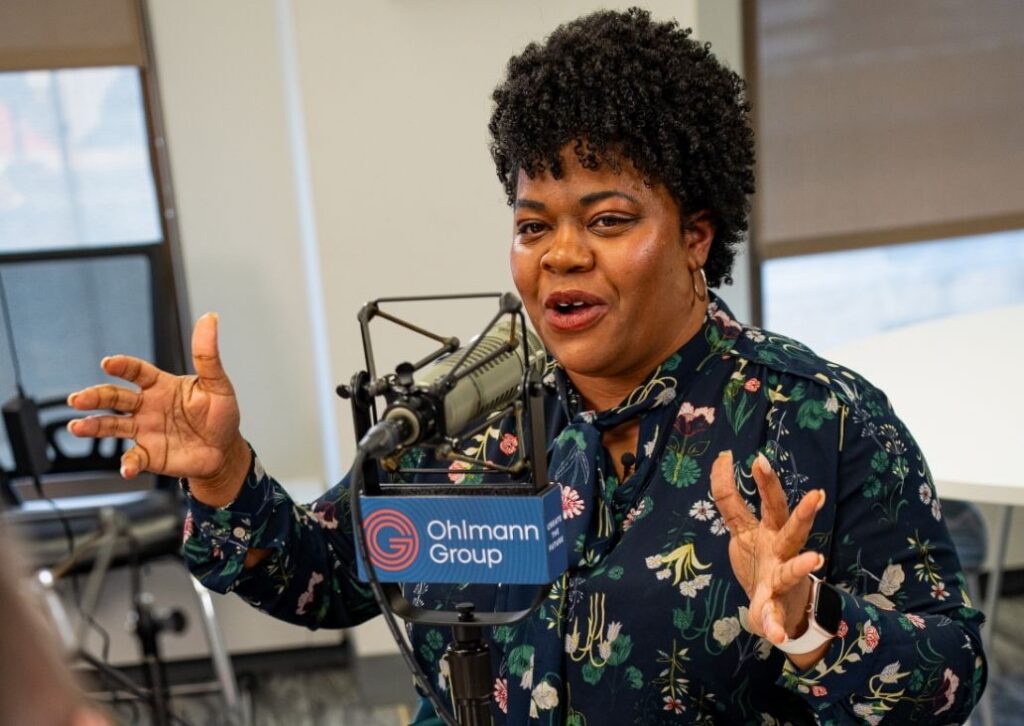
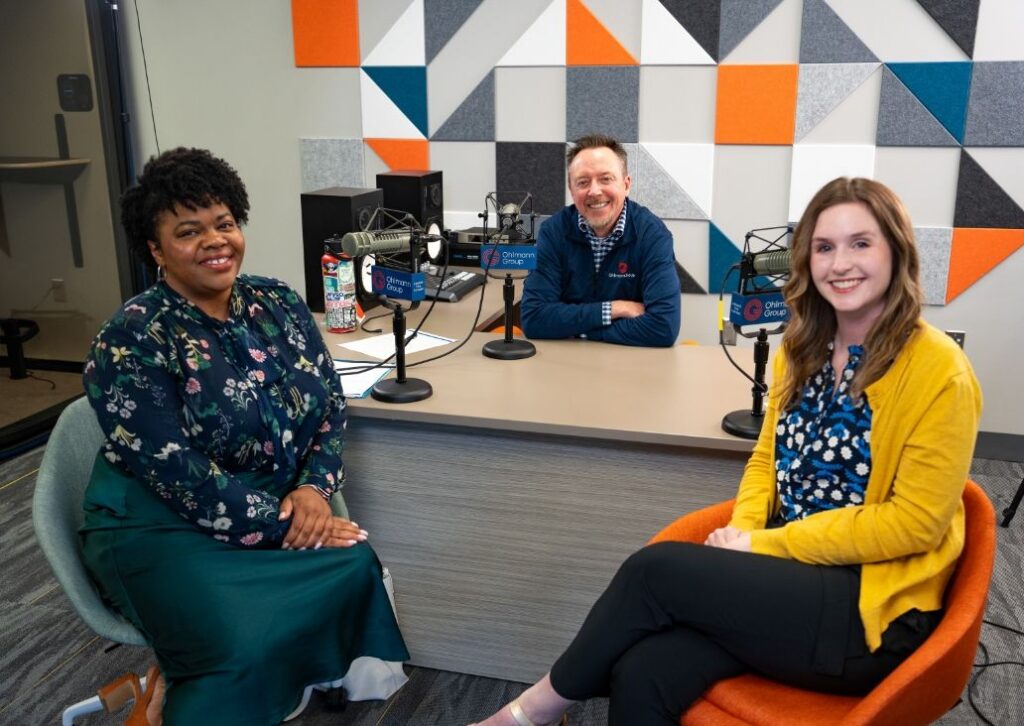
As President of Omega Community Development Corporation (Omega CDC), Rachel Ward is helping to shape the next chapter of transformation in Northwest Dayton.
From centering resident voices and investing in youth programs to expanding homeownership opportunities and using data to guide decisions, Omega CDC is building alongside residents and community partners to catalyze change through the Hope Zone Promise Neighborhood and the launch of RISE Northwest Development Corporation.
Tune in to learn more about Rachel’s leadership journey and her vision for a future of abundance in Northwest Dayton.
Listen Here:
Episode Transcript:
David Bowman:
Welcome to Creating the Future. I’m David Bowman.
Evelyn Ritzi:
and I’m Evelyn Ritzi,
David:
and today we’re joined by an inspiring leader, community collaborator, and friend, Rachel Ward. Rachel, thank you for being here today.
Rachel Ward:
Thank you all for having me. What an honor.
David:
Omega Community Development Corporation, or as most of us know, Omega, CDC is such a powerful part of our community, of your family’s legacy, and you’ve built your own path within it. So before we get into the work you’re leading today, could you share a little bit about your background and your story?
Rachel:
Sure. So you know, I am from Dayton. Dayton, born and raised specifically Northwest Dayton, and as the daughter of Daryl and Vanessa Ward, as you mentioned, my story is connected to the story of the Omega Baptist Church and the Omega CDC. So I’ve been along for the ride in many different ways, but my path has deviated at different points. I started my career at Omega CDC, 2008 2009 doing youth development programs, summer programs called Camp Kumba, and started our first Freedom Schools program. And then actually learned how to write grants at that time, which became really foundational as I continued to build my career. I left Dayton for about seven years, and left Omega CDC for a decade, and during that time, had an opportunity to work in Columbus, Ohio in youth development and grant writing, and go to graduate school in Chicago at DePaul and do some other grant writing work in philanthropy and youth development, and continue to build my, you know, really build the tools in my tool belt and get A sense of what I feel like. I always kind of knew I was experiencing it and wondering. I had some wonderings about how we could engage in community transformation in more strategic ways, right? I knew how to develop programs. I knew how to direct programs. I knew how to run programs. I even knew a little bit around how to raise dollars for programs and write grants, but there was something a little different that I felt needed to happen, and that was really cross sector, collective impact. And so learning more about that was was a true gift for me, and that happened through furthering my education, which then allowed me to come back to Dayton in 2018 and work at Montgomery County, which is where I was a manager of community programs for three years in the Human Services Department. And that was incredible experience working with a lot of our nonprofit organizations and safety net programs, our services and systems across Montgomery County also worked across a 13 County Regional prevention council for child abuse and neglect prevention and supported our earlier intervention services across the county as well. So incredible experience, which then created a great foundation and launching point for me to come back to Omega CDC in 2021 to begin serving in a role that would lead to becoming a president at this point, but at that point, we were getting ready to open the Hope Center for Families, hiring some new staff. And you know, I had the opportunity to bring all of those experiences, all of those learnings and wonderings and the kind of mental models around this cross sector, collective impact work, the strategy, the data, bringing it all together to really see what could happen if we applied all of those frameworks and lessons for some true community impact.
Evelyn:
That’s amazing. What an amazing journey that led you to today. So the work of Omega CDC really focuses on the Hope Zone. So for those listening who maybe aren’t familiar with the Hope Zone. Could you explain it and kind of the work that’s happening within the Hope Zone on a day to day basis that you’re leading?
Rachel:
Yeah. So you know, as I talked about those experiences coming full circle, Hope Zone really created kind of a container, if you would, for us to do that kind of work. So Hope Zone is a promised Neighborhood Initiative. So Promise Neighborhoods are a large grant. There are 46 federally funded Promise Neighborhoods across the country. They’re funded through the US Department of Education. Currently, they were created during the Obama administration, initially after the Harlem Children’s Zone and the work of Jeffrey Canada and Harlem New York. But it’s really about bringing together and creating kind of an ecosystem of supports from cradle to career in a specific place. So place based, cradle to career initiative focused on, how do you increase outcomes, positive outcomes, for children and their families in that specific place? So we bring together. And for Hope Zone, specifically, we have aligned our services in Northwest Dayton, 17 neighborhoods in Northwest Dayton that we call the Hope Zone. We are looking at aligning those programs and services to support 6700 children and 3400 families. We really focus a lot of our efforts in three of our Dayton public schools, Fairview elementary Edwin Joel brown Middle School and Thurgood Marshall High School. And then we support 21 organizations we’ve provided funding to through this grant, we have over 40 partners who are aligned with us. And through our grant, we received over 50 letters of support which aligned. You know, you do have to have a match for the federal funding. And so while the grant itself was about $29 million for five years, and we are in year four of our grant, we identified and aligned almost $90 million in a match from community partners around this area who were going to bring services and supports that would would come together with that ecosystem to really see that cross sector collective impact come to fruition.
David:
And while you’ve accomplished so much, it’s always changing. There’s always something new happening with Omega CDC, so you are stepping into a really exciting new chapter with the launch of Rise Northwest Development Corporation, which was just designated as part of the purpose built community network.
Rachel:
Yes. So
David:
Congratulations. First of all,
Rachel
Thank you.
David:
But for those who might not be familiar with Rise, can you tell us about Rise Northwest, the role it’ll play within Omega CDC plans, within Northwest Dayton?
Rachel
Yeah, sure. So Rise Northwest is a subsidiary of Omega CDC, so still very much connected to all of our work, but it really allows us to have a deeper focus in Northwest Dayton. So I talked about the Hope Zone really being focused on 17 neighborhoods in Northwest Dayton. So a larger footprint rise is really focused on five of those neighborhoods, and it’s very centered on resident voice. So what our residents of the Hope Zone have told us, even before we called Northwest Dayton the Hope Zone, they shared with us that housing and home ownership, affordable housing and home ownership, stronger built environments. You know, cleaner streets and safety, bringing these things together were really important to them. We learned that through neighborhood surveys, through canvassing, through engaging with residents, through monthly work groups and different opportunities, as we sought opportunities to figure out, how do we do this work and not try and spread the peanut butter too thin, right? Like we’d love to see this happen all across the city of Dayton, and I’m really excited that I do see, you know, pockets of development happening across the city. For Omega CDC, we needed to have a more palatable way to really see some impact happen in a more concentrated way that would message to our community that something really special is happening. So Rise Northwest is our opportunity to do that right. The Purpose Built communities network. It’s a national network, and they really focus on hyper local solutions. So within a half mile to a one mile radius, what can you see happen if you pour in a lot of resources, if you bring partners together around mixed income housing and economic vitality and community well-being? You know, what can and health and wellness services. What kind of transformation could you see? So while we’re doing that across 17 neighborhoods, what if we went really deep in five of them? And what we’re seeing already is that through alignment with housing partners like County Corp and city-wide development and the Land Bank, through a Pathways to Home Ownership and the Welcome Home program, we’ve seen about 10 new homes go into the Fairview neighborhood. We’ve been able to align funding that has supported homeownership classes and credit recovery support. We know that there are Omega CDC staff members and staff members from Dayton Public Schools and parents from Fairview Elementary and hopefully other parents and other supporters who are ready to go into their new homes. Actually, one grandmother who just got her keys, just closed and got her keys to her brand new, I mean, new build, right, new everything, new side, new garage, new flooring, new refrigerator, all that brand new bed for her granddaughter. You know, this is exciting stuff happening, and we would love, of course, it’s going to happen across the entire Hope Zone. But right now we’re focused on these Rise neighborhoods, these five neighborhoods at Hillcrest, Fairview, Mount Vernon College, Hill Dayton View Triangle.
David:
It’s so exciting. And just it’s, it’s great too, because a house is something you can see like you can drive by. Wow. It is happening, right?
Rachel:
Absolutely.
David:
And so for you personally, as you step into the role of president of Omega, CDC, while all this is happening, what does this moment feel like for you? And. And what are you most focused on or excited about? As sort of Omega starts this next chapter.
Rachel:
You know, that’s a big question, and often I have to help myself. Have to get out of my head right? Because often I am, like deep in thought about what needs to happen next, and how do we make that happen, and what’s the system and what needs to shift, and how are we going to do it? What’s on my task list? What’s next? But when I step back from it and really allow myself to just be in awe, to just be in awe of all that is happening. And really, as a person, you know, I talked about Omega CDC roots being or being connected to Omega Baptist Church, you know, I am also a person of faith, and, you know, just to be in awe of what I believe God has done in our community and through my life and for my experience, my journey to be set up in such a way that I believe that my gifts have contributed to something like this is really special, and so I’m grateful, and I do feel called to this work. I feel that, you know, as the President of Omega CDC, while I can get into my head about what needs to happen next, and do I, you know, are we doing the right things? I do believe that, because I am called to this work, and because all of those experiences have led to this space, that I can, step back a little and just relax some and know that it’s not all on me. There is there is something greater. There is something bigger than me. Right, as President of Omega CDC, that is helping to align this path, right, that there are other leaders in this space, that there are other partners that are here, that there’s a community rallying around us that there is something divine at work that is helping all of this come to be, and so I’m just in awe of where we are in this time and looking forward to what’s next. Truly.
Evelyn:
You mentioned it a little bit earlier, but something that really, really stands out about the work that you’re doing at Omega CDC is how closely and deeply the residents of Northwest Dayton are involved in shaping the programs, the initiatives, because it’s their neighborhoods, right? So what does that resident, leadership and ownership kind of look like in action?
Rachel:
Super special. So when I was writing, or, you know, working with grant writers, and I did a lot of writing as well, when we were writing the Hope Zone Promise Neighborhood Application. And, like I said, as a person who was studying collective impact and really thinking about, how do we apply all these different frameworks, and thinking, you know, how do we do all of this? What we wrote into the grant was to have these working groups, right? So, you know, instead of, you know, focus groups and people just talking about things, I wanted to ensure that the Hope Zone wasn’t just another initiative where people knew that there were some resources going in, but they didn’t feel like they had any agency or autonomy and how those resources were being allocated, or in how their communities would be affected after that grant was over. So we’re in year four of a five-year grant, meaning the grant is going to end at the end of 2027 all things considered. Yeah, we would love for it to continue, and we advocate for that every day. But right now, as far as we know, the grant will end at the end of 2027 so what we’ve been doing is really working to build the capacity of our residents to to have the necessary strength and skills and strategies and information at their fingertips to really sustain this work beyond the grant, what that has looked like is providing access to trainings, is bringing monthly work groups together so that people can work on collective action action plans right with short term, intermediate and long term goals that they want to work on. And then Omega CDC provides kind of scaffolding and other support to help bring those those actions to be so in the health and we had four different work groups initially that were aligned with our kind of, our theory of change, our pathways to self sufficiency. So for example, our health and wellness work group really initially, in the first couple of years, wanted to see more farmers’ markets in the Hope Zone, because one of our goals through Promise Neighborhoods is to increase the amount of fruits and vegetables that children are eating on a day to day basis. So they said, well, we need more access to fruits and vegetables, so let’s have farmers’ markets. And so the project management staff for Hope Zone really aligned with the residents on how they could do that. Who were the vendors, and what did we need to do, and when were we going to have the farmers’ markets, and how was that going to occur? Right? So it’s not just a space where people come and complain about not having what we don’t what we don’t have in our community, or just saying, well, somebody needs to do that. No, we figure out how to do it, and then we bring people along with us. So then we’re learning how to plan together. So we did that for the first couple of years of the grant, and then we realized, you know, really, we should shift ownership of some of this work, right? And some of that came from needing to shift budgeting, which, you know, you can use a. A things. You can see opportunities as like, oh, man, this sucks. We got to figure out what to do about this money thing. Or you can see it as an opportunity to create and innovate. Yeah, right. So we realized, you know, we had money in the first two years of the Promise Neighborhoods grant to really do a lot of capacity building, right? So we were doing trainings, and we were doing this thing over here, and we’re doing that over there. We had all these different work groups. People were all over the place. And I was like, Oh no, we don’t have that same money, that line item in budget for the third year, we got to do something different guys. So that was like, halfway through year two, I was like, We got to figure it out. So what we decided to do, like, one night, I remember this, I was sitting at home, and I started sending voice messages to to one of our team members. I was like, Okay, I got an idea. She’s probably like, You’re crazy. What is going on? I was like, so this is what we’re gonna do. I think we can start socializing it in the work groups, but I think it’s gotta be resident leaders. So what it led to, right? I’m just sharing ideas, but it’s the team that’s really making this happen. What it led to was us having 12 adult resident leaders and two teen resident leaders. These are people who were coming to those monthly work groups every month, the four different work groups, and those work groups had grown from like 12 people each month to like over 100 and they were hybrid work groups, in person and virtual, different times of the month, but we knew we didn’t have the resources to keep doing that at that scale, right? So we needed to do something a little different, and we needed to make sure that we were shifting into resident leadership. So two keys, what it led to was as sharing those opportunities, creating job descriptions, and asking the residents who were coming to the work groups to apply for positions. So we now have these 12 resident leaders who serve as presenters for four different areas, those pathways to self sufficiency, community engagement, health and well being, economic stability and education. We have greeters and floaters for our work groups. And then we have some team leaders. And now we have one monthly work group. So instead of four different meetings that happen every month, we have one work group with an average monthly of attendance of about 160 people coming every single month to Grace United Methodist Church, first Monday of the month, at 5pm so we will be there today. We have our young people. Are there. Part community partners are there. It is, is a pretty incredible to see. You know how people show up to be with one another, to see residents who are leading, who are hearing what’s happening and really emphasizing and encouraging folks to be part of the solution, rather than to just come together and listen and gripe and complain about what’s not happening, and to shift from a deficit mindset to really an asset based mindset about we have a lot of strengths. We have a lot of assets in our community, and we are part of those assets as well. So how do we leverage the assets that we have? Being resident-centered?
David:
That’s something too. It’s maybe not entirely unique to Omega CDC, but it definitely is a unique approach. Something is asset-based,
Rachel:
Yeah,
David:
For people who don’t know what that is,
Rachel:
Yeah
David:
Explain, compare and contrast that with sort of the the opposite approach, if you will. And why asset based is the approach, because I think it’s just so special and amazing and just, I mean, I think it is a big part of who you are.
Rachel:
Yeah, absolutely. So I think another way that people talk about is being strengths-based. Right? A lot of times they say that when you’re talking about like a individual person, you know being strength based is thinking about what strengths does that person bring? In this sense, asset-based community development asks: what strengths does a community have? Right? So rather than always focusing on the disinvestment that has taken place in Northwest Dayton, right? The closing of Good Samaritan Hospital, the closing of businesses up and down Salem Avenue, you know, crime and blight and vacancy and potholes, and you know, all the lists can go on and on, right? And in many communities, the list can go on and on, challenges in schools, teachers, all kinds of things. What happens if we shift our mindset? We don’t forget about the deficits, right? We don’t say that they don’t exist, but we also think about what strengths we have, what assets exist, and how we can leverage those and harness and harvest even those assets, our time, talent and treasure, in order to transform those deficits into some some true abundance, right? And so, you know, how do we use if, for example, this is what’s happened in the Hope Zone, right? If, if we’re, we have struggling schools, and we have challenges within our schools, right? How do we bring together folks who want to serve as volunteers, to read with young people? How to, how do we bring together community programs? How do we make sure that people that parents know about after school programs that exist in their communities? How do, how do we ensure that if safety is a concern, that we’re listening to our residents and to the young people to ask them, you know, what are you concerned about, and what do you need? And how do you want to be a part of the solution? And then we align, you know, the assets that we have, like existing churches and spaces around churches, is something that we did when we did relight nights last summer, and we plan to do that again this summer, using it and working with the actual church, Bethesda temple, who said we have a family life center that’s not being used. And our young people said, we just want a space where we can just be. And then we brought and they said they’re willing to help staff the space and be in the space. We brought those things together. Dayton foundation said, Okay, we have some pilot funding to support this. Those assets all came together to provide, you know, an opportunity for us to see something shift. So we don’t just sit in the space of saying we don’t have what we need, and everything is everything is terrible. No, we shift our mental models to think about the assets that we have.
David:
I like to think of it as it’s the difference between learned helplessness and learned hopefulness. It’s there is so much vibrancy and just the true sense of community, not community defined as well. This is a place with a name,
Rachel:
Right?
David:
These are people who know and care about each other and lift each other up. And it’s, you don’t have to spend much time in the Hope Zone to see it as truly, as a place of abundance, when you think of it in that context, which is just beautiful, and it’s, I just think it’s amazing how you build on that.
Rachel:
Yeah, special.
David:
So you mentioned the children, kids a little bit, and I know youth development has been a through line in your career. So what are some of the programs that you’ve really seen make a difference for youth and for teens in Northwest Dayton?
Rachel:
Yes, I started talking about RELITE a little bit. I will say that’s definitely a bright spot for me in recent years. You know, if I were to go back a little bit, I think about the fun that I had a youth development professional when I was like boots on the ground until it wasn’t fun anymore. I used to have so much fun with with young people, and I still do, right, but, but in recent years, RELITE nights. It really came out of, you know, a really challenging summer, the summer 2024 there was a police involved shooting of a young man. There was a young girl in the Hope Zone who was murdered in her bed. You know, by stray bullets. There were several other incidents of fights and other things happening. And because we already had the infrastructure of people gathering in Northwest Dayton through our monthly work groups. At that time, there were four of them. We went to those work groups and just asked people, you know, what do you want to see? What’s the challenge? What do you think is the cause of the violence? What needs that? What needs to change? How will you be involved in that? So don’t just stop at the like, why is this bad, and what’s wrong here, and what needs to happen, but also, how are you going to be a part of the solutions? And what we heard from our young people was that they wanted safe judgment, free spaces, spaces where they could just come and be. They wanted to have, you know, they wanted folks to help them with their homework. They wanted places where they could do, they could, you know, engage in art activities. They wanted to go on field trips. They wanted, you know, access to college information. They overwhelmingly, they wanted to engage in positive, safe activities, but they didn’t want them to be super structured, and they wanted them to be judgment free, so not a whole bunch of adults telling them what they could and couldn’t do and how they couldn’t do it. And you know, we’re like, okay, if we’re really gonna be who we say we are. Let’s figure out how we, you know, how we align around this. So that led to, you know, us thinking about, what can we do, you know, for our for our young people, or with our young people. And as we were having some conversations with the city of Dayton and with a group that we call our CERO group, community engagement for religious organizations, so a group of pastors from the Hope Zone, you know, I started thinking about the values of Omega CDC. So our values are, you know, an acronym that spell out RELITE. And it’s really all about relighting the Hope Zone. So a lot of times when people think about Northwest state, and they think about the assets that used to be there, I’ve talked about deficit mindsets, or, you know, just the disinvestment, right? And the idea is that we’re going to relight this Hope Zone. We’re going to bring this energy and this vibrancy back to this area. So that led to this, this concept of relight nights, right? And so we started, you know, socializing that with the teens, like, what if we did this thing, relight nights, where we, you know, did at least two nights a week. We have some spaces where people. Who have already agreed that we could be there, and you guys could work the you know, we have funding that we could pay you to do this, and you can bring your friends, and we’ll work through it. And they were like, Okay, let’s see. So they agreed to come alongside us, and we had, I think, 10 young people who served as teen ambassadors. We were at Northwest recreation center one day a week when they didn’t have summer program, and we were at Bethesda temple, Apostolic Church, another day during the summer, during the week. And it really was a judgment free space. I mean, I would come there sometimes, and they would just be like, on the stage with a microphone, singing karaoke. I don’t they just, they were doing what they wanted to do, right? There was always food. They had specific assignments, right? So, you know, they they had written out they have kind of this, like, cooperation thing that they, and I won’t call it a contract, but, like, they had rules, right, that they had come up with together, right? But the young people were leading it, so they would start the afternoon with, like, All right, here we go. Here are the rules for the day. They were so serious about it, though, right? Because it was their space that they had created, and they were going and, you know, we told them they had responsibility for helping to foster that space, right, to ensure that it was maintained. And adults were just kind of there, right? Like some of the pastors came, and we just made sure that things went pretty well, and we had a good summer. We really did. So anyway, that was that was really special. And it was one of those things where, like, I came from a really more traditional youth development background, right? You have a program, it has a specific schedule, you do things on this day, and you have all the different things worked out, and, like, all the and it’s like, how do you lose How can we be more responsive, resident-centered, but also still maintain some of the guardrails around development. And so this was an opportunity for us to collaborate with the young people so that we could see that opportunity. And they are super excited about it coming back, although they’re like, Is it is it happening? It’s gonna happen. It’s gonna happen.
David:
So one of the other events that I know that you’ve done, Evelyn and I both volunteered last year at it was the youth for peace march. And it was just, is such a powerful has, you know, been such a powerful event? Yeah? You talk about that, just where that came from?
Rachel:
So the youth for peace march, also, you know, was kind of birthed out of having some, some really challenging experiences with safety and violence in the community. And, you know, we talked about our connection to, or I talked about our connection to Harlem Children’s Zone. You know, because we do Promise Neighborhoods, and promise was built out of the Harlem Children’s Zone, we’ve had some, some really great connections to HCZ. They’ve really served as mentors and advisors to Omega, CDC and the Hope Zone Promise Neighborhoods. And one of the things that they’ve done for over 30 years at this point is an annual children’s peace march. I had the opportunity to go to the peace march in Harlem in 2024 I believe- yeah, I think it was 24 Yes. And at that point, just got to see the how large and vast it is. Of course, you know, 30 years of doing this, and they serve, you know, 10,000 children a year across different sites, and you know, all their staff and partners are there. I mean, it is a major production. There are like, presentations, and, you know, dance presentations and singing presentations and art and there’s like, yeah, it’s incredible. It really is. It’s an incredible production. But also, you know, is absolutely, meaningful, and sends a message to the larger community that this is a signal of what it means to support our children and for them to say to you that they deserve to grow up in a peaceful community, that they want peace, that they know what peace looks like, that they deserve it, that they’re demanding it. And so every year, for 30 years, they’ve been, you know, they go out into the streets, and they’re saying, we want, we want to see this, right? So we were inspired by that, you know, I was inspired to go see it. But if you know my boss, our CEO, Vanessa Ward, she was inspired to create it. She said, No, we’re having our own peace march. And I was like, oh, okay, great. So, you know, we made it happen, first in September of 2024, and then again in 2025 but it really is a great opportunity, you know, for our young people, similar to like they do it in Harlem, right for our young people to, you know, to show to have a demonstration in our community, to say, We want peace. We deserve peace. Our young people deserve to grow up in a space where they don’t feel unsafe going to and from school. They don’t feel unsafe. Excuse me. Playing on playgrounds, and they demand that right of us as adults to protect them. That’s the other piece of it that’s beautiful is that there are adults that are surrounding them and so that they know what a community feels like, but to just have that public demonstration,
Evelyn:
When you think about your personal leadership journey, what’s maybe something that you had to learn or maybe even unlearn as you’ve grown into leadership? And this is me asking as like an emerging leader, young professional type person?
Rachel:
Yeah, I think the biggest thing is that it’s okay to not have all the answers that you know, surrounding yourself with others. Excuse me, relying on a team of people, there’s true power in that, and sharing ownership and leadership with people, you don’t have to know it all. And there’s some real beauty in that. There’s freedom in that. And I think a strong leader knows that and leans into that, yeah.
David:
So Omega CDC is building long term generational change. Who or What keeps you motivated as you carry that legacy forward?
Rachel:
Yeah, you know, I’m motivated by the fact that I that this legacy is connected to my family, yeah, so that’s a huge motive, you know, motivating factor, right? That there’s something about the legacy of a company, right, where you know, you know, that you’re working in a company that’s doing transformative work, that’s, you know, working with multiple generations of folks, right? So that you’re working with children and their parents and caregivers. And you know that it’s impactful work. It’s mission driven work. But also doing that work with my family, working with my mother, is something that that definitely motivates me. I think, like I said, the mission of the work is absolutely something that that motivates me tremendously to see children and their parents right, and to know their names. When I’m out in community and at a school and the kids are like, Miss Rachel, oh my gosh, they know me. Like, that’s so cool, because I think that I just know them, or that I’m excited about them and their families and the opportunities, and when I hear the stories of families that are really coming alongside us and have, you know, bought into this work that we’re doing, and, you know, they’re getting their GEDs or getting their diplomas, and they’ve gotten great jobs, or they’re, you know, moving into their new homes. I mean, that is motivating, right? And it’s the kind of thing that that has to carry us into the next season. Because, you know, we have to be around for that next generation in order for, you know, yes, they can do it themselves, of course. But I want to be here to see part of it, right? I want to know that that story, this generational impact, is, is, is, you know, something that we’ve had a part in, and that there’s a return on that investment, and that that return is the growth and success of these children for generations to come. It is. It’s just really impactful work, and it’s very special and meaningful. I think it’s work that I would do. You. Anywhere in the country, right? Like, how would do this work wherever? Because I believe in, you know, place based creative career work. I believe in collective impact. You know, it’s what I’ve built my career on, but to do it in a place that I call home, in the Hope Zone, you know, and you know, right around the corner from the first home that I ever knew on Auburn Avenue is, like, super special, right? This is my home.
Evelyn:
If someone is listening right now and feels inspired, which I’m sure they do, because I do, maybe they want to get involved, maybe as a volunteer or supporter, how could they do that?
Rachel:
Yeah? So you know, there are always opportunities to engage and bring your gifts into this space, your gifts of your time, talent or treasure. So you know, if it’s your time, volunteering is a great, great way. We do have a way for people to sign up to volunteer on our website at WWW dot Omega dash, cdc.org, so you can volunteer there, if it’s your talent. We often are hiring, whether for full time or part time positions or contract positions as well. A lot of times those positions are in our education department or after school programs, and sometimes we’re, you know, even just looking for instructors who want to bring gifts like building Legos, like with kids and, you know, poetry or, you know, songwriting classes. I mean, we have all kinds of classes and enrichments that our young people get to experience. And some of that is just because people wanted to give of their their talent.
David:
Yeah,
Rachel:
It has given. It’s, you know, it’s a gift that keeps on giving right to our young people. And then, of course, if it is of your treasure, meaning your money, we are always grateful for it. I was at a conference last week and someone said, you know, as leaders in the nonprofit field, we have to stop shrinking the size of the problem based on what we think someone is willing to give. And we know that this kind of long term, generational work requires significant resources. And while we, you know, identify opportunities for that from, you know, federal government, wherever, wherever and whenever that becomes available. You know, the level of resources that it will take to see this transformation happen in Northwest Dayton is significant. And it won’t just be a today challenge. It will be a continual investment that’s necessary. And so if someone is interested in giving of their treasure, our website is also a great place for them to visit, and there’s a Donate Now button that is available on the website. We also have an annual event every year in November. I think this year it will be on November 16 at Carillon Park. So we invite people to join us for that information will be forthcoming about our annual gala as well. And you know, we’re always available. And that work group meeting, the Hope Zone, work group meetings, those are always great opportunities for people to join us and be a part. First Mondays of the month at 5pm Grace United Methodist Church.
David
You know, sometimes you donate just because it seems like a good cause. But I think with Omega CDC, you can see the immediate impact, just in, you know, programs for kids, or, you know, through the stories of the people who you’re impacting in a day to day, through the house you can see, but also you’ve been really at the front and cutting edge of using data right as a means of accountability for those donations, right? Could you talk about just a teeny bit about that? Because I think that’s really sets the standard for how not-for-profits operate.
Rachel:
So we’re striving right now to really get a better sense of, you know, our long term return on investment, so building kind of a social return on investment methodology, so that we can get to a point where we can say, you know, for every dollar invested, this is the return. We’re not quite there yet with our modeling, but what I can say is, you know, as we look at investments, we know right, that we’re calculating the, you know, for every volunteer that they’re contributing, you know, X number of dollars towards our, you know, towards our bottom line, right? So volunteer hours count towards the you know what we’re able to distribute. Right? That for our young people who are reading at a, you know, a higher level, right? Because we’re investing in reading specialist literacy support specialists in the classrooms at Fairview Elementary and because we have after school programs and Student Success navigators, we’ve seen reading scores go up from 8.9% to 18% right? And one. Year, we even hit 29% so this year, let’s hope that we’re like back up there, right? We’ve seen kindergarten readiness go from 5% to 25% right? We’re tracking our outcomes, right? We are. I said, our North Star is 6700 children. We’re at about 6300 right now, between Omega CDC programs and services and the partners who have come alongside us. So, you know, as we talk about the return on investment, and while you know we’re going to get to that point, so the next time you have me back, I’ll be able to tell you dollar for dollar. But you know, we are absolutely tracking day in and day out, right? You know how our programs and services are yielding transformative outcomes for children and families along the cradle to career continuum. But we’re also looking at, you know, how those programs and services and supports are connected to those pathways to self sufficiency. So how are they helping us reach the mission to break the cycle of intergenerational poverty? And how are they helping us build pathways along education, community engagement, health and well being and, yeah, and economic stability, right? So we track data around those things too, right? Like, how you know how many of our seniors at the Omega senior loss are able to remain independent for as long as possible, and are they participating in activities that help them do that? Right? So we’re tracking all of that kind of data on a regular basis. We have a strong and robust team that’s looking at all of those things, and a significant data model that really helps us build that out. Because it’s really important to be able to to demonstrate not just how much of something we’re doing, but how well you know, those services are providing the necessary supports, and then at the end of the day, is anybody better off? Right? Because I can say that, that we did this, you know, community initiative that should have, you know, that was around safety, right? I can say that, you know, kids had a great time at this thing. I can say that kids were reading better. But, you know, ultimately, what we want is for the young people and for their families to say that my life is better,
David:
Yeah
Rachel
If they’re still feeling like day in and day out, things are challenging, life is hard. You know? What difference does it make? Ultimately, what we what we want is for people to believe in greater opportunities to believe in the hope that we’re trying to sell. We’re selling hope.
David:
One last question, and we asked this, of all the guests on our show, what’s the future that you want to create?
Rachel:
So my word, I think I’ve said it already is abundance. I talk about abundance a lot. I think when we first started the Promise Neighborhood grant, I feel like there was something that kind of settled in my spirit around, you know, this idea of all partners and residents and staff, if you know, we brought all that we have or all that we’re willing to contribute our time, talent or treasure into the center, whatever the center is, right? I think in the center, as I was thinking of into the Hope Zone, if we really invested those things, that what would be the result of that, what we would yield would be abundance, right? There would be more than enough, more than enough for everyone, right? And that’s the true transformation. And so that’s the, that’s the future that I hope to create, a future of abundance, right? Where we’re not, there will always be challenges, but where we’re not trying to pick apart what this person has that I don’t have, or, you know, I don’t have enough of this, right? But there’s more than enough because and, and we’re all contributing to to that. And because I give, I’m also receiving, right? I may give of my time and talent and may receive in my treasure, right? I may give of my treasure, but I receive from someone else’s time and talent, right? You give what you have, but you receive, you know, something else which is, which is truly special. And so that’s the that’s the future I hope to create, is a future of abundance, whether it’s in the Hope Zone or some or, you know, throughout the nation, the ripple effect of that I will be felt.
David:
That’s beautiful. Well, thank you so much.
Rachel:
Thank you.