Josh Stucky is an entrepreneur, philanthropist, educator, community advocate, and unabashed Dayton enthusiast.
Whether you know him as co-owner of Square One Salon & Spa and the new Wayne & Clover coffee shop, or as a founding member of The Rubi Girls, Dayton’s beloved charity-driven comedic drag group, Josh is a consistently enthusiastic Dayton original, always leading with joy.
Tune in to learn more about Josh’s journey and his advice for anyone looking to make a difference in their community.
Listen Now:
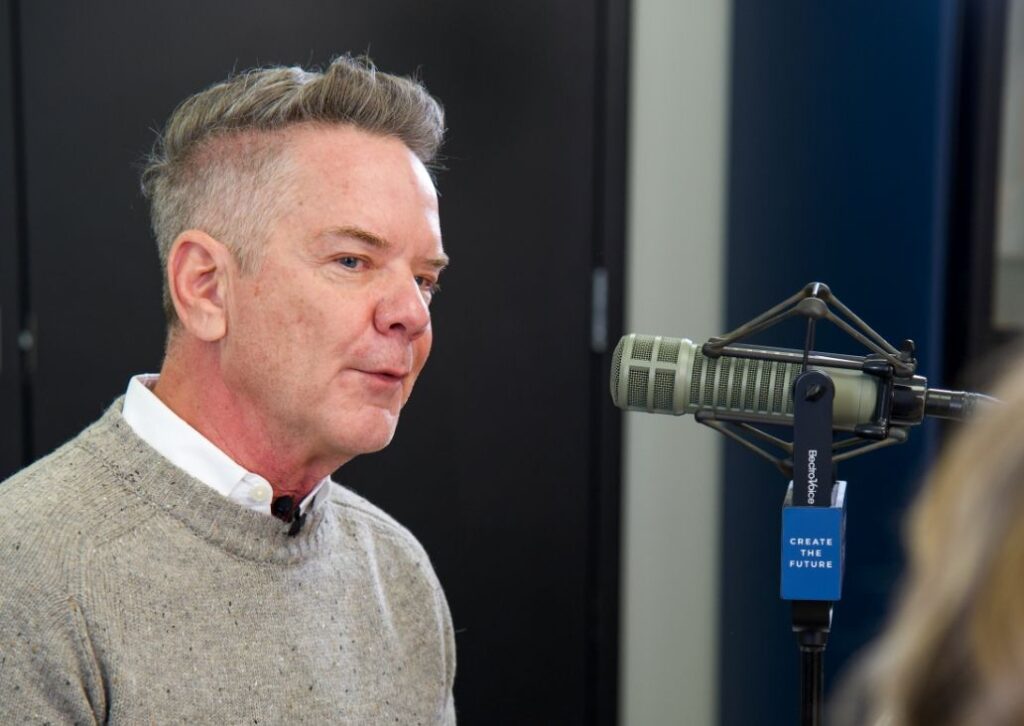

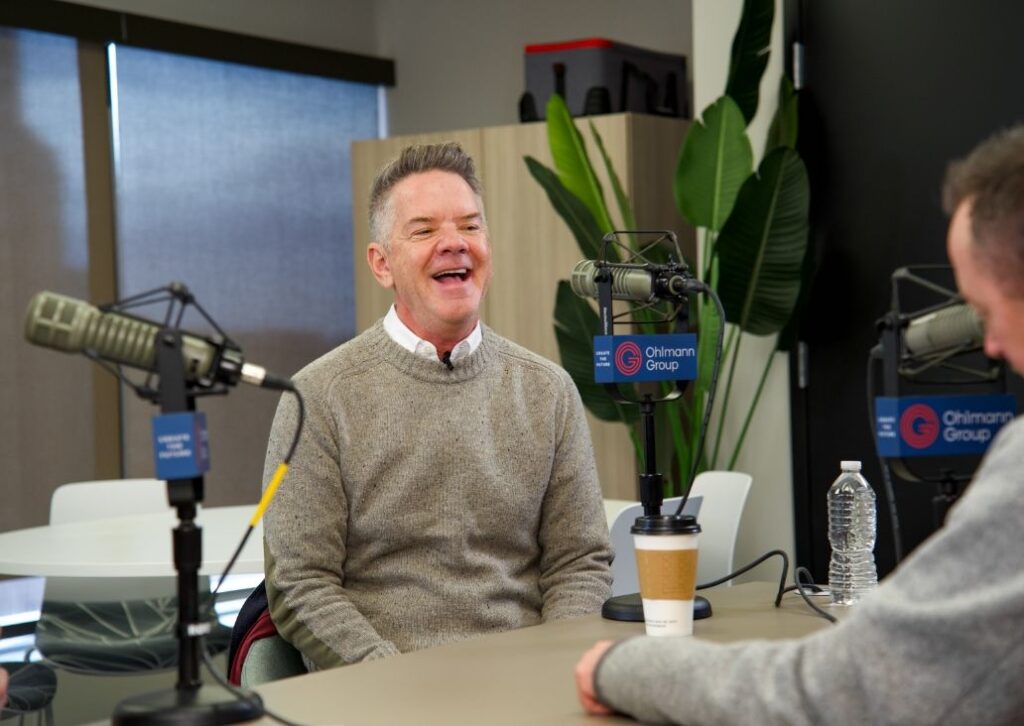

Episode Transcript:
David Bowman: Welcome to Creating the Future. I’m David Bowman.
Evelyn Ritzi: And I’m Evelyn Ritzi.
David: And today, we’re joined by another true gem in the gem city. He’s the co-owner of Square One Salon & Spa and Wayne & Clover coffee shop, one of the founders of The Rubi Girls, and involved in countless other cool community initiatives in Dayton. It’s Josh Stucky, thanks for joining us today.
Josh:
Thank you so much, guys. Appreciate it.
David:
So you are just one of my favorite Daytonians.
Josh: Oh my gosh. Thank you.
David: Somebody who I haven’t known for like, a long, long time, but I feel like I’ve known forever like, and I feel like you just have that vibe.
Josh: Well, thank you.
David: You’re just one of the coolest, nicest, most fascinating people I’ve ever met.
Josh: I appreciate it.
David: So let’s start with you and your story, because you have a fascinating journey. Tell folks where you grew up and what you thought you’d be doing like as you thought about your future.
Josh:
Yeah. Well, I was born in Springfield, Ohio. My father was a professor at Wittenberg University. My mom was basically a librarian without title of librarian. Okay, she worked in the library. So, you know, education was everything when I was a kid. So I think I kind of knew that teaching was going to be part of my life. Just didn’t know how, but I my secret desire was to be a soap opera villain, and it never really happened for me. I thought it would be so much fun. Oh my gosh, yeah. So the acting bug is always in my system as well, but I think teachers are actors. You know, they’re on the stage at all times. So we moved from Springfield out to a farm in South Charleston, small community. I graduated with 59 other students. We all knew each other really well, too well, and it was kind of fun. It was like a captive audience. And I was very extroverted as a kid. So whatever there was to do, I just kind of like got up and attention was my drug. And whatever I could do to get attention, I would do, but I found along the way with that, you know, you’ve got to courteous, and niceness goes a long way. And I really do give my mom all that credit. She really was good about listen, you got to be a little boy. And so tried to keep that in the back of my mind at all times. So anyway, from there. Went to visit some colleges. After high school, I was a Southeastern Trojan go Trojans, and went all over the place to find out what college I wanted to go to. Happened upon Wright State University. Go Raiders. Go Raiders walking through the Creative Arts Center, which I think you’ve heard this word before, David, but I was walking through the Creative Arts Center, there were guys in leg warmers, and I turned to my dad and I said, I think this is where I belong. My dad was like, Oh my god. So it was the decision. So anyway, I went to Wright State, known for their education department, known for their theater department, just always meant to be, yeah, went there. Went to UD for my master’s, and settled in. I’ve lived in the UD area ever since Rubicon street stone mill. My whole life’s been over there. So and that brings us to, you know, all the different businesses and things that popped up as part of my life here in Dayton.
Evelyn:
Well, speaking of that businesses, one of those would be Square One Salon and Spa, which I frequent.
Josh:
Love you for that —
Evelyn:
Which has grown into, you know, it’s one of the premier beauty destinations in Dayton and Columbus, too. So what made you decide to kind of make that transition from education into business entrepreneurship?
Josh:
Yeah, well, what I noticed was a lot of teachers would get to about 2022, years, and we’re like, I’m hanging in there, but I’m not excited about my job anymore. I didn’t want to be that person. So I was like, how do you keep life interesting and do different things? And so I kind of was into massage at that point, and I thought I meant because I was getting them that, well, I want to learn about massage. What is massage all about? Went to massage school some friends of mine. There were four of us, which is where the Square One comes from, four guys, one mission, Square One and one to get involved in that. And one of the guys with there used to be an own A’s salon. It was a huge chain in Dayton, and he was the manager, and he said, You know what? I’m ready to jump ship. Let’s do this. So we went downtown. To the cannery, which was not the cannery, nothing in there to other businesses. Walked in, found this space. All of our parents family were like, Are you out of your mind? Nobody lived there. It was just an old warehouse building. And we just thought, let’s give this a chance. Dayton downtown has people, but not amenities. Yeah, yeah. So let’s see if a salon works. And it just was wild. I mean, it just kind of wheels started moving. Centerville opened up. There was a, you know, the corner there opened up, went there, and then it just kind of caught on like wildfire. And really, I’ll tell you the secret everyone who’s in business, the secret is the people that work for you should be treated the way you want them to treat your clients. That’s the whole thing. We treat our people like gold, therefore they can pass on that. And I think it really makes a huge difference. With the Columbus and New Albany situation, which really was a fluke, there was a gentleman who had found out about square one who was ready to get out of the business, and he said, I’m ready to sell my two salons here. Would you guys be interested? Well, about that time, one of the owners had met somebody in a romantic way in Columbus, and said, I’ll move up there and run him if we do this. And I’m like, and he kind of drove us all crazy, sorry, Doug, so he said, I’ll do this. And we were like, Let’s go for it and see what happens. And they’ve done the same thing. So it’s really been that magic sauce of treat your people well and your business will do well, kind of thing.
David:
Yeah, I think too, like, one of the things, every time I’ve I’ve heard you talk, yeah, tell any kind of story, it, there’s always this element of, I was really interested in this and I thought, well, what can I do with it? Yes, how does that kind of sense of curiosity, I guess, map to sort of your story?
Josh:
Well, I think one of the big things is I, first of all, I was raised by a librarian and a college professor, so the you know, the world’s your oyster. Go, do it, don’t. So I think it was encouraged to always try new things. Yeah, I don’t think that we as a society are encouraged to try new things. I think stay in your home, you know, work your nine to five, get your wife and your kids, and that’s great for a lot of people, but it wasn’t going to be great for me, yeah, and I knew that. And so when these things pop up, and I have a wonderful husband, by the way, when these things pop up, Brent’s always like, here we go again. Because, you know, Brent is the brain trust. I’ve got to give it to him. He is the brain trust of Square One. He really is. He’s the one that runs it. He understands business, he knows what he’s doing, but he’s with a dreamer who’s like, well, that’s great, but I need to go open a coffee shop. And he’s like, Oh my god, stop. You know, that kind of thing. But I just feel like life, you know, life is made up of so many components, and if we’re only clicking the same button, we’re only getting the same response. So I like to do as many different things I can possibly do. But in the meantime, as you know, through Miami Valley meals, in the meantime, how do we help other people achieve the same so that’s kind of where the charitable piece comes in. Yeah. So whenever we do something, there’s always a piece that benefits other people, and that’s that nurturing piece that feels so good when you’re involved in different things.
David:
Well, that’s the perfect segue into my next question. You are also one of the co-founders of the Rubi Girls. Nonprofit organization has raised funds for countless causes through the art of drag. Tell us about the Rubi Girls, how it came to be, because I think that’s a great story. And did you ever imagine it would become kind of the community that it is today?
Josh:
First of all, no, I did not. So you know, long story short, there was a house at 22 Rubicon street. People think it’s Ruby, like the gem, Ruby, yeah. Well, that, you know, played into Dayton, but it’s Rubicon streets, where it came from, r, u, B, I, girls. That’s why it’s spelled that way. And it’s no longer there. The building was torn down when Miami Valley expanded. But what happened was we were all in college, and there was a group of us that lived in this house, wild children, and a lot of theater guys, you know, teachers, and we would get together and just put on old wigs and dresses and put on shows for each other. It was ridiculous, totally stupid. So we started opening our doors. We were right there at UDS campus. People were coming over. Had no idea what they were getting in for. I mean, these guys, girls coming over, we just have beer out the wazoo. People would come see our little shows. And it was just there was something magical about it. I mean, you were standing like two feet from people. They were screaming and yelling, having the time of their life, and we were just being stupid. Yeah. So then what happened was HIV began to, like take hold in our society. And a friend of ours said, You guys, this would be a great way to make people laugh about this situation. Used to be a bar downtown called changes, old gay bar. So he said, Why don’t you come and do a show for us? And that night changed. History for my life and for the life of these Ruby girls. So all of a sudden, we’re no longer wearing old wigs. We’re wearing new wigs. We’re finding new gowns. We’re, you know, thinking we’re somebody, we’re going to be these amazing whatevers, but we always kept the sense of humor. It’s always funny. We don’t do serious drag. We’re not female impersonators. We’re guys in dresses were acting stupid. So when HIV was kind of doing what it was doing, we were going all over the state entertaining bars, at state lodges, anywhere we could find people who were going through the HIV situation and their families to give them a minute to laugh and to remember Life’s good. And people were opening up their pocketbooks. How do we support you? Support them. And it just took on this weird thing. And I’ll never forget this, the old Coliseum at the fairgrounds, which, by the way, The Rubi girls have a saying, if you want your building torn down, put us in there. Do a show for you. It’ll be torn down shortly. But we did a show at the Coliseum, and that night, we had a million dollars in funding. Since then, we’ve raised $4 million for organizations in the area. It’s unbelievable. So, you know, we started Masquerage, which was another part of partying for HIV. Multiple things have come out that kind of spun off of this. But then the funny thing is, when people were like this whole drag thing, what’s going on when they started to see the money we were making, we started gaining respect and gaining like inquiry, and how do we get involved with the Ruby girls? And these are very conservative organizations kind of leaning into us. And I thought we really have a message that’s resonating. Yeah. So our message is a different way to make a difference, which really leans into a lot of things without really telling you what’s going on. So we’ll get phone calls from people like So what exactly do you need and do? Well, we need a stage and mics and lighting. We need dressing rooms. We’re going to make a mess. And we are drag queens. You’re what? Well, we’re drag queens, and you’ve done all this for you know, we’re all these community organizations. Yes, we have, and it’s led to so many great things in my life. I’ve seen the country. I’ve seen the United States through that got to be on the Dayton Foundation, you know, from recommendations people, from my philanthropic stuff, and it was all out of putting on women’s shoes. In a way, it’s weird. I tell people, it’s like, Wonder Woman, we spawn and we were totally different persons. Oh, yeah, it was crazy.
Evelyn:
As someone who has had a very interesting journey and insatiable curiosity, what are some things that people maybe don’t see behind the scenes of a journey? As someone that’s a founder, an entrepreneur, what might surprise them?
Josh:
Well, first of all, we all have a role. Everyone, all of us have a role. My role is the cheerleader. I’ve known that since I was young, right state, cheerleader, high school, cheerleader. I’ve known that since I was young, I cheered up my family. We had some hard times with my family. So my persona has always been, how do we get other people involved? And, you know, cheer them on. And that’s a great thing and a hard thing. The end of the day you’re tired at the end of you know, going through what you’ve done for your own security and survivability, you somehow have to get the next morning and do it all over again for other people. And that’s wearing when I was an elementary teacher in Kettering I would literally have sit in my car some mornings before I went in. Before I went in and be like, You got to do this for the kids. You got to do this for the kids. That’s hard to do every day, but people like you have an expectation. So I don’t think what people see about me is, even though I’m goofy and crazy and able to be out in front of people, there is this guy who takes what he does seriously. It’s not all fun and games. It’s it’s difficult. The amount of organizations that I’ve walked into and realized the work they’re doing is so hard, and what I’m doing is putting a little exclamation point on let’s turn this fun. You know, there’s a part of me that wants to hug these people and be like, what I’m doing is the good part, or the fun part. What you’re doing is the hard part. And, you know, I think people take me as a joker. Sometimes there’s like, no, the Joker is the ways to the means and the means to the ways. Yeah. So it’s, it’s different. And believe me, there are days where all you know, going to my house and just sob like a two year old, like, this is tough stuff. And HIV was really tough. So I think that’s what people don’t see. And a lot of times again, my dearest friends will get on me and be like, you’ve got to rest. You’re going at a million miles an hour and try to do for everybody, and it’s going to cost you, and it does, it does cost you. I mean, that’s, that’s the reality of all that so, but it’s a good problem to have. Yeah, let’s just say that it’s interesting.
David:
One of the things I am in the process of reading a book called Playful. And one of the things that I think that book like that, it’s top of mind for me, that I think you embody. Is this notion of bringing fun to the party, right? Like so much of how we approach work is with seriousness or with brute force. I just got to lock in and just get it done. And if we just work harder and focus more than it’ll all work out, yes, but fun and play like that’s how we start to learn. That’s where we come from, and it gets beaten out of us. And I think you are masterful in bringing that as a tool to like, hey, you know, there’s more, more than one way to sort of get through life and find success and build things, yes. How do you sort of cultivate that sense of player. How do you bring that every day, right?
Josh:
Yes, I think for adults, mostly the big thing is trust. People won’t play. They don’t trust they got to feel safe. They got to feel like it’s okay to do this, whatever that might be. So Brent and I do some culture classes and business classes in the area, and the very first thing we do is we take red solo cups, and they have to build buildings out of them. They’re like, what are we doing? And the first five minutes is kind of a sociological experiment. You’re just watching these people like they’re afraid to take that first step, that this is okay. And I think that’s the thing. You know, I read a statistic not very long ago. Speaking of that book, I read a statistic that 90% of third graders think they’re creative people? Yeah, 10% of 30 year olds think they’re creative people. We’re doing something to the psyche of people that holds them back, right? So giving people permission to say it’s okay to play and make a mess and try something new and throw the ball on the wall and see where it goes. It’s okay to do that. When people break free from that, it’s almost harder to bring them back to the fold, to be like, Okay, we’re done playing serious again. So I don’t know. I mean, I was with siblings who all played, you know, we all were just playful people. Yeah, and I think it’s, it is a gift. It’s totally a gift to have this, I think too working with children. I realized early on in working with kids, my God, the energy and what they can do for you is just stunning. And you learn so much from what kids give you. And the biggest thing you learn is this is okay. It’s okay to make that mess in that classroom. It’s okay to, you know, to do any of this kind of things work in the hair world, they make a mess with each client, and it’s okay, you know what I mean. So it’s just been part of it. And it’s also very interesting. Sometimes, speaking of the Dayton Foundation, Mike parks, there are times where I think they kind of look over like, What is he up to now? You know? And in life, because I’m that person, I want to bring up an idea that may be kind of crazy, and then they’re like, let’s give it a whirl. Now I will tell you. Truth is, there are people in this world that don’t want you to feel that way. I don’t want you to feel that it’s okay. There’s some there’s some kind of control mechanism that, if I let you go, the whole wall comes down, and it’s like, that doesn’t work, especially in our society right now? Yeah, you got to give the creatives their their room to play,
David:
Yeah, exactly. Well, I mean, you look at the like, a three year old’s not gonna sit and wonder, like, oh, well, what should I know? Like, they’re just gonna start making stuff, and if it collapses, does make something else, right? Like, that’s we lose that.
Josh:
We lose it. We do. Becomes too serious.
David:
Yeah. So you built so much right here in Dayton. What is it about this community in particular that makes it a great place to start to grow a business? Yeah?
Josh:
Well, we all hear this all the time. It’s the smallest big city or the biggest small city. I think Dayton. I don’t know what it is. Can’t put my finger on it. Dayton is one of the most creative, accepting communities. It’s very this. What has happened to me? I don’t feel like could have happened if I was in Cincinnati. I just don’t believe that I I feel like the people here are encouragers. It’s gritty. There’s something we’re all trying to achieve together and patting each other on the back. I can’t explain it. There’s a fellowship to this place. And I think the one thing is that what Dayton does because it has that grit and that that old rust belt industry kind of feel that people pick you up when they realize things are not going so well. You’re not left out there to you know, kind of struggle people are what do you need? What can I get for you? That’s unusual. And I also think that what’s kind of fun about Dayton is we have trials and tribulations that we find solutions to as a community. Yeah, it doesn’t happen with one person. It’s through the community. I went to a funeral recently for a really dear friend of mine, and seeing what I saw in that place with every diverse group in one room coming together, I thought this town is amazing, so there’s something to that as well. We’ve got an interesting way of working through those problems.
David:
Yes, there’s an interesting dynamic that I think Dayton has, where the fact that we’re from Dayton, yes, matters more than the other. Like, that’s the the tribe we all identify with, and it matters. And then it’s sort of like, well, and you’re on this side of this issue, or you’ve, you know, root for this team, or do, you know, whatever it might be, the normal dividing lines of society, yes. Like, we kind of put all that aside and go, but, yeah, but we’re from day, like, at the end of the day.
Josh:
Yes, that’s why I have the coffee mug that said, Bitch Please, I’m from Dayton, exactly, exactly, yes, because we’ve seen it all. Yeah.
David:
All of us have gotten our ass kicked by the world at some point in time, got up, dusted ourselves off, this is all right, or been helped up by someone who wouldn’t you wouldn’t expect to lend a helping hand, right? And we all sort of look at that and go like, Yeah, I kind of want to do that for other people.
Josh:
Yes, it’s true. It’s true.
Evelyn:
I feel like the small business community in particular is so strong because, I mean, just the size of this town, to be able to know the owners of your favorite small business, like, that’s so cool. It is cool.
Josh:
And I think, you know, if you really think about the large industries in Dayton at one point, they were all over the place, yeah, and now you’re kind of, where are they? Well, what’s really happening is the small business we’re keeping this town clicking and ticking. So I agree with you 100% Yeah.
Evelyn:
So if someone’s listening, maybe they have an idea, an organization they want to found, or a business they want to start. What kind of advice might you give to them? to help them take the leap?
Josh:
Well, first of all, I mean, fear and excitement are the same. The exact same thing. They’re exactly the same. And I think we lean into fear more than we do excitement. So people are like, I want to try this. I want to try this. 20 minutes later, everybody’s told you why you should be scared to death to try that. So I try to tell people all the time that you know, live in that fear piece, because that’s going to move you, and that’s important. But remember the exciting piece that’s what will drive you through all this. Listen, I woke up one day and owned a coffee shop, having no idea how that was going to come to pass, but I’m excited about it. I’m scared, but I’m excited about it. And I think there’s a magic to whatever that exciting piece is. There’s adrenaline’s in our system for a reason, and it’s going to turn you one way or the other. Are you scared to death? Are you excited to death? Is one way or the other, and we’ve got to learn, when I go and talk to people at classes at UD or Wright State, we’ve got to learn to instill in people that that energy is there for a reason, and how to use it, how to channel it, you know, how to put that little the reins around it, and to keep it on the side of the good and it will get you through. Also on the practical side, there are so many safety nets in this world to provide and protect for us when we’re trying to do something, we just are afraid to ask for the help American culture, we don’t ask for help. You’re either going to do it or you fail. That’s it. Now, I do believe it takes a village. I do, yeah, and we have to learn to ask for help more. It’s really essential. I didn’t get here on my own. I didn’t do any of this on my own. You know? I did it because I have friends and family and organizations like this that come through and say, you know, let’s listen to your voice and see how we can hone you in on things. But just get to that point in your world where you realize your body, your brain is saying, I’m gonna do this. I’m gonna move it forward. Fear can keep knocking on the door and I will answer it eventually, but right now, I got to keep going until I figure out what this is that’s driving me to do this.
David:
Well, yeah, there’s this misnomer that, like, fear is unnatural, or something that should go away, right? And it’s sort of like, just lean in like, it’s a natural thing. But if you lean into it, it does become that a positive attribute. You know, you’re going on a stage, like, you should be a little nervous. Should be nervous. Lean into that push. That’s the excitement part.
Josh:
Yes, there’s nothing worse in being, like, involved in theater and people, we got this, I’m like, Oh God, don’t say that’s terrible.
David: So your most recent venture is Wayne and Clover. Wayne and Clover near, near to my heart, a coffee shop in the former space of Ghostlight coffee, yes, so tell us about Wayne and clover. What are people gonna expect when they walk through the door?
Josh:
Okay, Ghostlight was beloved 15 years in the business. At 1 point, 4 of them off and running, and we went there every day, probably for about six, seven years, maybe not Sundays. Went there every day just about though, and had our coffee on the way to work. Group of four or five of us always met, kind of like the old men’s group. Get together talk what’s going on your world. And the owner saw this and talked to us one day, and he said, guys, I think I’m moving on from go side. We’re like, you cannot close, go side. This is a Dayton institution, you know. And he’s like, I just, I can’t do it anymore. Ready to go do something different. And I said, What would it take for us to just take it over? And guys and group were like, I’m not taking over ghost light. I’m like, Would anybody like take over ghost light? So my friend Tim was like, I’ll do it with you. What the heck. So we knew nothing, know nothing about coffee. We’re learning going to classes, but Brent and I went home that day. Brent’s part of that group get on that day, and Brent’s like, What is wrong with you? You’re mentally ill. There’s something wrong with you. I said, You can’t let it close, you know, let’s do this. So we sat down, had coffee, sat down, had this conversation, and Brent knew, you know, I’ve retired as a teacher square one. You know, I’ve been 26 years with square one. I needed something new to do, so I was talking to Brent, and I said, let’s think about this. We can’t keep the name goes late, but let’s think about this. I recently read, if you want people to know where your business is located. Use your address, 1201. Was our first idea. And then I said it’s a Wayne and clover. And I’m like, Oh, my God, oh my god, Brent, Wayne and Clover are people. Do you see them? She’s like, a blonde, kind of, like, you know, buxom cutie. He’s annoyed with her. His name is Wayne. He’s like, I don’t want to own, you know, a coffee shop. And Brent’s like, oh God, here we go. And then the street that runs behind it is Theobald, yeah. And I said the Red Dog is Theobald, and the dogs part of the, you know, whatever. And Brent’s just going, there is something wrong. So I went in and talked to the girls who worked there, because there’s 11 people that work there. I walked in, told them I’d see you guys every day. I’d love to do this. What do you guys think? And they’re like, well, we keep our jobs. I’m like, of course you’ll keep your jobs. I’m like, I’m not working here. I just want to come in and keep having coffee. So we have a really cool structure there. Since we’ve owned it, many people don’t realize this, but that building has a whole other side to it. So we went in, talked to the landlords, the manoviches owned that building. They have been unbelievable. Went in, told them our ideas. Brent’s a big designer. For those who don’t know that, Said, Brent, I’ll let you design this place. If you go to one, you know, Square One, how gorgeous it is. That’s all I am. That’s dummy said, I’ll let you design this place, if you let me have this place, Manovich said, if you want to bang out a wall, take over the other side, go for it. Well, now we’ve got three more rooms and this amazing bathroom, and this old library, this old library with bookshelves and old books we discovered. And it’s like this is meant to happen. Something about this is meant to happen. So since then, Brent’s probably right there right now painting or doing something, it’s become his project. And what’s been great about is the community has embraced us. People wanted this. They wanted to see this place survive, and it’s been an amazing thing for us. So I’m there every day. You know, try not to go on Sundays, but I’m there every day, and it’s been a fun venture. The ladies that work there know what they’re doing. They’re true baristas. They would like me to leave them alone and let them do their job, and I do. And my buddy, Tim, who works full time, comes in when he can. And it’s just been, I can’t even tell you, it’s been one month, and every day I’ve been there has been joyful. So it’s been a great, great thing to do.
David:
Well, the coffee there is spectacular.
Josh:
Oh, and Contempo Roast from Centerville. That’s, that’s an actual Centerville establishment. Yeah, they have their own place in Centerville called Contempo Roast. Great people. Yeah, yeah, yes, yes, yes. And we’re doing all local stuff. You know, Salt Block Biscuit, does our food. Bae’s Bakery does our other food. You know, we’re trying as hard as we can to get everybody from the community involved with us. So slow to go, but it’s happening.
David: It’s such a great place. Highly recommend.
Josh: Thank you. Thank you.
Evelyn:
I think, and more than that, you’ve committed to supporting nonprofits through the coffee shop too, which I think, you know, it just ties back to your your whole throughline is philanthropy, like and every venture you’re doing is you’re giving back, which I think is just so admirable. Why do you think that is — why giving back just means so much to you?
Josh:
Personally, I had an epiphany. This is really strange. I was do. I was speaking to some people down in Athens, Ohio group of kids, and they’re like, you’re all big about philanthropy. What you know? What is it about philanthropy? And I was like, you know, what is it about? I don’t know what it is. And then it hit me in the 1970s I lived on a farm, beautiful pond, great place to grow up, many bikes, trampoline, whole nine yards, my dad filed bankruptcy, and we went from this to nothing. And people helped us. I was probably all of maybe 1312, 13. People helped us. When I was telling this story, these kids in Athens, it came out of nowhere, I was like, That’s it. That’s what it is. People reached out to help my family. And I thought, you owe it to the world to do the same. Yeah, listen, Brent and I have been blessed beyond blessed. And we we are committed to making sure that the arts and the animals and people who don’t have coats. We’re committed because we both grew up in that environment. Brent, on the other hand, his family, his dad was GM worker, got laid off. Same story, yeah. So we both are like, listen, it’s been given to us, for us to give to others, and it’s always back of mind. I can’t the other day, we were talking about when we were shopping for Christmas. What? What is that all about? First of all, but we’re shopping for Christmas, and I was like, you know, this is ridiculous. We have everything that we could possibly need. And that makes you turn it when you see these kids and these families that are truly going through what they’re going through, you know, so with the Ruby girls donated to 100 nonprofits last year, 100 nonprofits in this community. Think about that. And there’s 4000 I think that need money. We donate to 100 of those. Brett and I were thinking, you know what you’re doing, not only in doing that is there’s a kid there, just like us, who’s seeing it. And it’s like, when I get older, I’m going to do the same. So it’s the wheel that keeps on turning. Tina Turner, you know, keep moving and keep doing their thing. You know what? I mean, yeah, that is essential. We got to plant the seed. We have a generation of people. They’re gonna have more wealth than any generation before them. Yet we’re not doing a great job explaining philanthropy and charity these people. I could get go off on social media about this, but it’s true. We need to show these young people the way, the path to helping others. That’s what it really is to me.
Evelyn:
And helping others in a joyful way, right? That’s contagious. That’s what’s contagious about it.
Josh:
It’s unbelievable. It really is unbelievable. And somebody turns tunes like, you know, a true, heartfelt thank you. That’s it, you know, it’s amazing, yeah.
David:
And it’s so easy to get locked into, you know, sort of doom scrolling, or what people think of you, or that, you know, all these other things where you’re lost in your head, and that can be depressing and dark, like, you know, and it overwhelming, as opposed to when you’re giving, right? Yes, it just like you get more than than you give you, just when you’re bringing joy to others, right? There’s something magical about that.
Josh:
And you know, you know, from, you know, the whole Wright State, I also teach at Wright State. A lot of people don’t know that I teach at Wright State University as well. And the one thing that kills my heart, and I tell them they’re all sick and hearing my sobs, for you, but the one thing that kills me is when they’re, can we use AI for this? I’m like, your voice is so much more important than that voice, you know, it really is. And they’re like, but maybe one assignment, I’m like, you guys, I want to hear from you. Why does your phone have a better answer than you do? It doesn’t. So there’s something, to me, in the same way, with charity and philanthropy, that somehow they’re going to look through somebody else telling them what makes them a better person than themselves. Yeah, you got to find it within yourself. It’s getting spooky out here.
David: So Josh Ward wrote a piece, an op ed piece, but, and I think the Dayton Foundation featured it on social media. But about, you know, he, he grew up wanting to be a superhero, yes, and the adult manifestation of that is, well, you can do that every day through just acts of kindness to other people like you can be that superhero.
Josh: That just gave me goosebumps. It’s so true. So true.
David: Yeah, so one last question. We asked this to all of our guests, what’s the future you want to create?
Josh: Yeah, I think more than anything, I want people to get back to other people. I want people to lean back into each other. We’re losing a social piece, and that’s what makes us thrive, is other people. I mean, it truly is, and it scares me a little bit. I have a group of nieces and nephews, and we always get together and talk these things out, and they all kind of give me a little eye roll, like, there he goes on his love train. But the truth is, I mean, I do believe in love, and I do believe that peace comes through us working together, not machines, not something on a phone, not something on a computer, it comes through us. And that’s one thing I love about the Ruby girls and square one and all those organizations that I’m part of that’s at the crux of all of it, people, helping people, and finding different ways to do that. So for me, the future is finding ways to communicate with each other again, hugging each other, loving it out. It’s possible. I think socially right now, it’s all about blame and shame, and it feels better to be like, I hate you, though I’ve never met you. You know, that’s that’s easy. It’s really easy to do when you’re in a room with somebody. It’s pretty difficult to feel that way. So we got to get back together face to face, socially, and work through this. There’s a way. I mean, we’re in the greatest country in the world, in the greatest. City in the world. Yes, it’s true, and we’ve just got to find a way join hands again and say, let’s work this out. It’s pretty simple,
David: That future is beautiful. It is beautiful. Well, thank you so much for joining us today, Josh. We really appreciate it.
Josh: Thank you guys. This was fun.