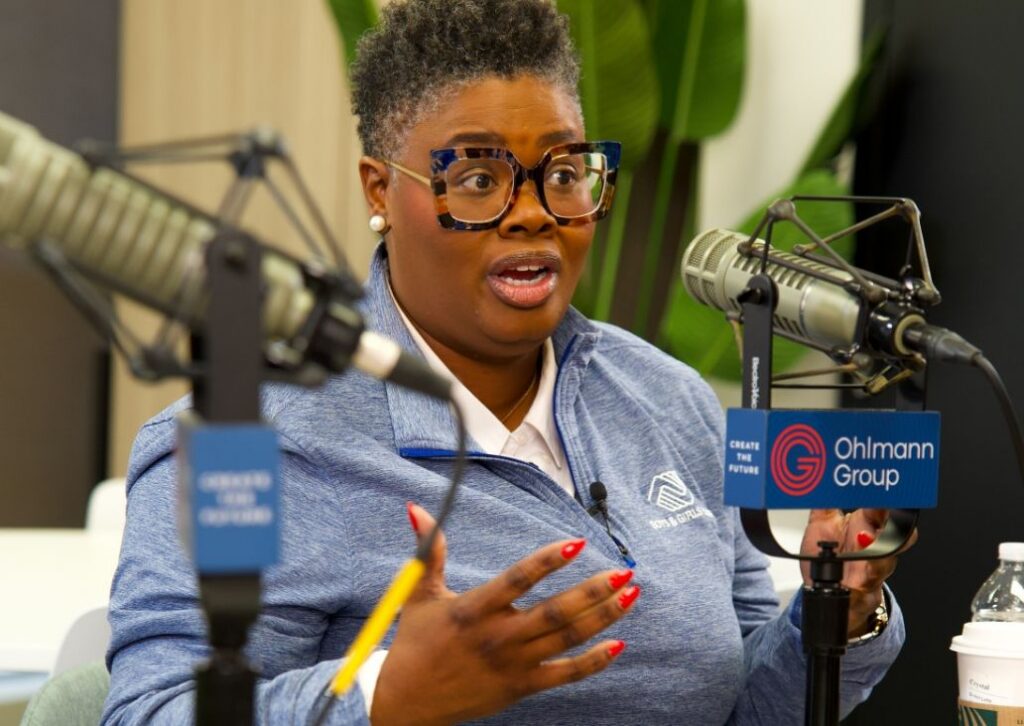
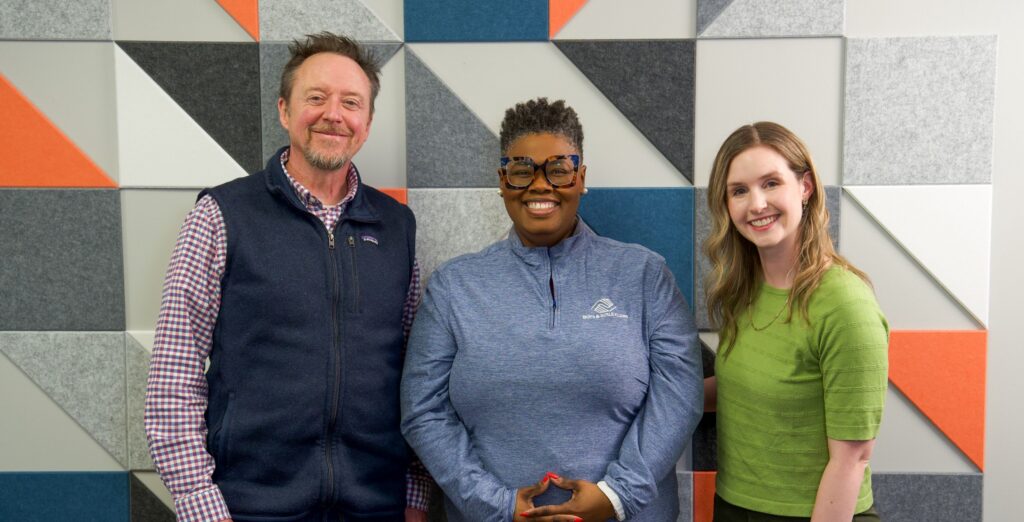
Crystal Allen, President & CEO of the Boys & Girls Club of Dayton, is a visionary, award-winning leader with nearly 30 years of experience dedicated to transforming the lives of young people.
In this inspiring episode, Crystal shares about her leadership journey, her unexpected path to Dayton, and the future she wants to create for the next generation. You’ll also learn about her vision for the new Boys & Girls Club of Dayton facility being built on the same land, featuring a first-of-its-kind Life & Workforce Readiness Center designed to empower Dayton’s teens with the skills, certifications, and confidence they need to succeed in the careers of tomorrow.
Listen Now:
Episode Transcript:
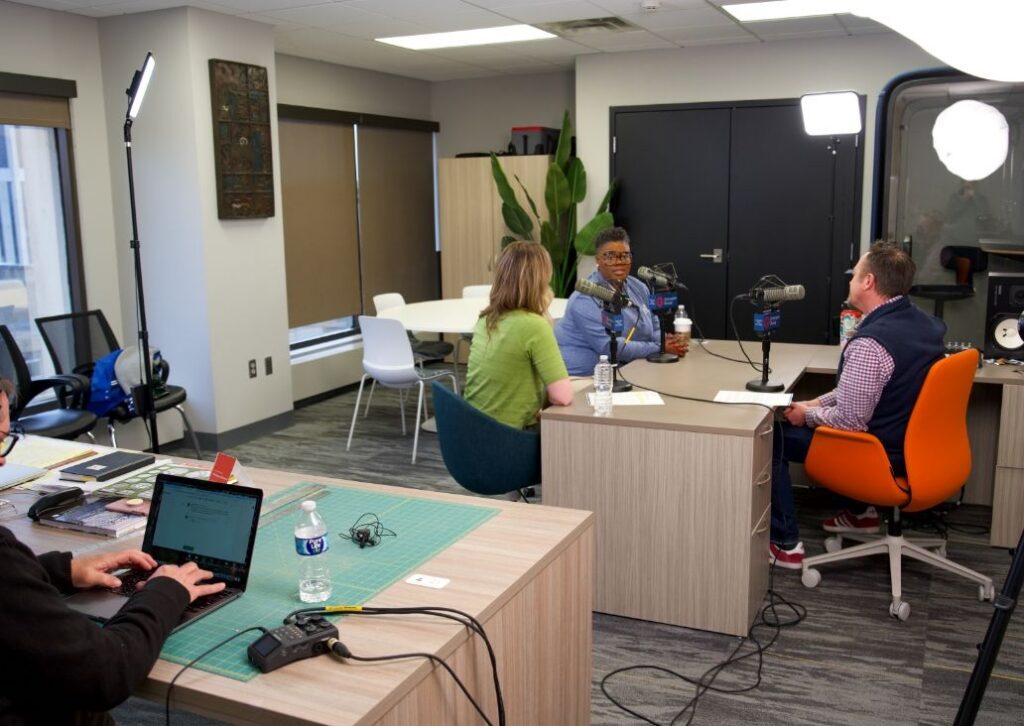
Evelyn: Welcome to Creating the Future. I’m Evelyn Ritzi
David: And I’m David Bowman
Evelyn: And today we’re joined by an incredible community leader, Crystal Allen, who’s the CEO and President of the Boys and Girls Club of Dayton. Crystal, thanks for being here.
Crystal: Thank you for having me. I’m excited to be here.
Evelyn: We’re so happy that you’re joining us today, but we’d love to start with you and your story. If you could share a bit about your background, your journey and what led you to the work that you do.
Crystal: Absolutely, I often start by saying, I’m a kid from a hard place, hard space. I grew up in Cincinnati, in the West End, and over-the-Rhine, and had a wonderful life, raised by a single mom. There, I have two younger brothers, and my very first job was at Lincoln Recreation Center 13 as a summer camp leader with little kids. And honestly, from that moment on, you know, I fell in love with youth development. Graduated from Central State, proud alum of Central State, go marauders, and I majored in English pre law. I was going to go to law school, and commencement. Day of commencement, Tom Joyner was our commencement speaker, and he said, anything that you would do for free is what you would do with your life. I know I said, there goes my degree, right like and so it was really at that moment, President Garland was our president at the time at Central State he and he was adamant about me applying to Ohio State law school. And I told him that day. I said, I’m not going to law school. I would not practice law for free, but my heart, even throughout college, I’d always worked with young people, and I knew that this is the calling, you know, that I had. So I started in Boys and Girls Clubs of Greater Cincinnati in 2010 and I started out as a part time program leader in a classroom with middle schoolers, and then was promoted to be a program director. Did that for about a year and a half, and then I was promoted to be a club director. And I did that for about six years, almost. And I was promoted to be the vice president of HR, and did that for about five months, and then was promoted to be the vice president of operations in Cincinnati. I was the first woman and the first African American person in that role. And so did that for about four years, and then my shoe broke, and that’s how I ended up in the role that I have now. So a quick story about my shoe. I had resigned from Boys and Girls Clubs of Greater Cincinnati, April 1, with the intent to leave. August 31 this work is really, really hard. Had a daughter that was going to be going off to college, and I was like, you know, I need to, like, maybe take a different journey. Here was post covid, you know, reevaluating things that I thought I needed to be doing. So April 5, I was walking into the State Capitol in Columbus for a big meeting with boys and girls clubs from across the state. And as I’m going into the building, my shoe broke, and so I’m going into the restroom to fix my shoe. And as I’m going into the restroom, another lady is coming in there with me, and we’re laughing about my shoe. And I say to her, I say, are you here with Boys and Girls Clubs? Because I genuinely love to talk to people. And she said, Yes. She said, My name is Shonda McKinney, and I’m on the board for the Boys and Girls Club of Dayton. And she said, I’m here because we just lost our CEO March 29 and I said, Oh, well, I don’t know anything about being a CEO, but maybe these are some things that you could consider until you get a new CEO. So I kind of ran down a bunch of operations things. And she said, You need to talk to my board chair. So I talked to the board chair, tell the board chair the same thing. Well, two hours later, Boys and Girls Club representatives, Boys and Girls Clubs of America representatives are also at this meeting, and our National Vice President of the Midwest said to me, he said, Crystal, we hear you’re leaving Cincinnati. There’s a project we might need your help with, and we want to talk to you tonight. So we talked that night. The project was to help out in Dayton until they found a CEO. He had no idea I met Shonda and Mika in the bathroom. Okay, wow. So we talk Wednesday, I get goosebumps every time I tell a story. We talk Wednesday. We talk Thursday, Friday. I’m driving home from Columbus, and I call my executive coach, who just so happens to be from Dayton. I was paired with this executive. Coach by one of my board members in Cincinnati. At the time, my executive coach was Dr Karen Townsend. So I called Dr Karen, and I say, Hey, Dr Karen. I decided to resign from my role last week. I know we haven’t had a chance to talk about it and yada yada yada. And so she said, Well, Crystal, what else did you do this week? And I said, I’m leaving Columbus for this meeting that I had, and she said, I have to stop you and tell you something. She said, executive coaching is really about you, so we don’t spend a lot of time talking about me, she said, but a little while ago, the Boys and Girls Clubs of Dayton asked me to join their board. My husband is a former board chair, and our family has been involved with Boys and Girls Clubs for decades, she said. And I’m telling you this because this morning, we got an email from one of our board members about this girl that they met in the bathroom in Columbus, who they think might be able to help us until we find a CEO. So we drove in silence for a couple minutes. Okay, God, I guess I’m not going anywhere. So I came up for the first time to see Boys and Girls Clubs of Dayton. It was April 11, I think it was somewhere around there of 2022 and stayed for a couple weeks just to observe and to offer some recommendations. And at the end of April, at a board meeting, I was asked to be the interim CEO by the board. So I was the interim CEO while still the CEO in Cincinnati, because I had to fulfill that commitment, right? And so was able to split my time. Had a great support from my Cincinnati team, which I’m grateful for, and the leaders there was able to support both, both organizations, and I applied for the role, and they kept me.
David: What a story. Oh, my goodness.
Crystal: almost four years ago.
David: Yeah, that’s just one where the universe just comes together.
Crystal: Absolutely.
David: Well, for those who may not know, what is the Boys and Girls Club? Who do you serve? What kind of programming Do you offer? Tell us about it.
Crystal: Sure, so Boys and Girls Clubs. We are Boys and Girls Clubs of Dayton. We are part of Boys and Girls Clubs of America. It’s our mother organization locally. We were founded in 1930 so we’ve been around for almost 100 years. We serve young people kindergarten all the way up until their 19th birthday. And there are some boys and girls clubs across the country that even serve youth up in youth and young adults up until age 24 and our mission is to enable all young people, especially those who need us most most, to reach their full potential as productive, caring, responsible citizens. Our vision is to become the premier out of school time program of choice for teens and young people and caregivers and community partners. So when young people are out of school, we want them thinking about Boys and Girls Clubs, but when we mesh those two things together, really, we exist. Exist to help break the cycle of generational poverty and so every single day in our clubhouses, we could say clubhouses now because, and I’ll get into that in a minute, but we operate our programs really in four pillars. So our first program pillar is really centered around health and well being I often say we’re not interested in creating athletes. If that happens, that’s great. I’m most interested in helping our young people understand what happens to their beautiful brains when they move their bodies. Yeah, so 45 minutes every single day, they’re doing some sort of physical movement. We also provide a snack and a hot, nutritious dinner every single night. Last year, we served more than 37,000 snacks and meals to our young people. We also ensure that they have access to mental and behavioral health support, full time mental and behavioral health support on site for a lot of our young people, they may not have access to those resources. And so we do that, along with a lot of prevention programs and anti bullying programs as well. And then the second bucket is really centered around academic engagement, right? And we, I get a lot of questions about, you know, why don’t you start with academics? Because the data shows us that when young people have a lot of trauma, right? It alters their brain. And so it’s difficult to learn if you have so much trauma. So we work on when we think about meslow’s hierarchy of needs, right? And the basic things that we need as adults to thrive, that’s why we start with that health and wellbeing bucket. So academic success and recovery, 45 minutes of academic enrichment every single day. You know, a lot of our young people do not receive homework, so we hired a full time education director who is there ensuring that young people have a better linkage to the school day during after school time. The third bucket is really centered around character and leadership development. I tell the story often growing up, you know, where I did, we weren’t told to stay in over the Rhine in the West End. We were told graduate from high school and get out. No one told us that the over the Rhine in West End today would be the place that it is right. And so we’re empowering our young people to own their space and their place. In their community and their city, and to be engaged and have a voice and what’s happening in that space. And so every week, they’re participating in 45 minutes of some sort of civic engagement, right? We we often talk about to our young people, you know, cleaning up the glitter mess you made is not community service. That’s reasonable service, right? That’s the mess you made, friend, so you have to clean that up, but we are engaging them in the community, and the last bucket is really around life and workforce readiness, right? All of us had someone ask us when we were five or six years old, what do you want to be when you grow up? Right? The challenge is a lot of times when you come from a hard place in space, no one’s asking you that question, and if they are, it’s difficult to see a pathway to get there. And so we are ensuring that every single week, our young people are engaged in life and workforce readiness programming as early as age five, right 1816, is too late to ask young people, what do you want to do, right? So we’re starting at age five. Thank you for coming to my TED Talk.
David: That’s spectacular.
Evelyn: Yeah, it seems like it’s just very holistic.
Crystal: It is holistic. And when we think about the needs of our young people, they are ever, I mean, ever changing. And so at Boys and Girls Clubs, we are often soliciting feedback and input from our young people, from our caregivers, from our community partners and all of our stakeholders about how do we better prepare our young people to be great contributors to our region?
Evelyn: I think it’s unfortunate, but there’s so many misconceptions that adults often hold about our youth, and especially teens. What do you wish more adults, more people understood about the young people that you’re working with on a daily basis?
Crystal: That’s a really good question. I think the one thing I wish more adults understood, and this is directly from the young people that we serve. I wish we would listen more, listen without judgment. Yeah, sometimes I think it’s it’s hard to support young people based on our value systems, right? So we go into these conversations and spaces with young people with our own value systems, and being able to lay that aside and really lean into where they are at the moment is really important. That’s the one thing I hear from from teens. I hear from my kids like Mom, I just want you to listen. I don’t want you to necessarily solve it. Our young people are resilient. They rise to the occasion. You know, when we raise the bar and they just want us to listen. They want us to listen.
David: Yeah. So working with youth every day, it must give you a unique perspective. So when you think about that next generation, what is it that gives you hope?
Crystal: So this is this question is perfect timing. So last night, we hosted our annual Youth of the Year contest, or competition. Youth of the Year is the highest honor that a teen and Boys and Girls Club can receive. So they compete at their local club. They go on to compete for the state competition. From there, they go to regionals, and then they go to Nationals. And I was thinking about my hope for our young people as I watched them tell their story. There we had six candidates tell their story about what the club meant to them and how the club has changed their life. And I think what gives me hope is the resilience of our young people, but also how we at Boys and Girls Clubs, are preparing them to utilize their voice. We’re empowering them to utilize their voice, right? I think a lot of times, you know, organizations, social service agencies, even education systems, sometimes can cross the line telling kids what they need to do, or telling caregivers what they need to do for their child. I think we’re learning to partner with our young people for their future, in lieu of telling them what they need to do, and through that, they’ve developed this, this big, strong voice of advocacy. And so the fact that they can advocate for themselves in in amazing ways, intentionally, authentically and unapologetically, I think that that gives me a lot of hope. That’s what your question was.
David: Yeah, I think back on that, that period of life, for me, like it’s a time when you are told to sit down and be quiet, like you’re not always encouraged to use your voice. So to not only make that okay, but to promote that, I think that’s just a beautiful thing.
Crystal: Our kids are. They’re not going to be 9, 10, 14, for, you know, forever, right? I think about my own daughters, right? My girls, I have five daughters, and at 1213, you take them to the doctor and the care. As a parent, a caregiver, I’m asked to leave the room, yeah, so that they can have a conversation with the healthcare provider. Well, if I don’t have that conversation up front with my daughter, she may not be prepared to advocate for her health needs, right, right? So really, what we are doing is empowering them to become self-sufficient adults, and that involves us listening as adults, but also giving them the tools that they need to be successful and advocate for themselves.
David: Yeah, and that sense of agency and responsibility at the same time where absolutely, hey, you can your opinion matters, but also it has consequent, like absolutely, so, you know, get out there and speak about things, but make sure they matter.
Crystal: Absolutely.
David: Yeah, that’s beautiful.
Evelyn: Speaking of giving hope, there’s something really exciting happening at the Boys and Girls Club as you undergo building a cutting edge new facility. Could you tell us a little bit about that, including the life and workforce readiness center for teens? Why this makes you so excited?
Crystal: Yeah, oh my gosh. I’m so excited about this. So you know, in 2022 our organization was looking to do, really a renovation, just a partial renovation, of the top floor of our facility, then a 42,000 square foot facility, the envelope of the building, HVAC and a few other things. We had a lot of challenges in that facility. We didn’t have air, didn’t have heat, a lot of wasted space, water leak, I mean, all kinds of challenges. And so as an organization, right, we recognize that our young people need and deserve a better space. And so we plan to do renovation, which was like $1.9 million for just that partial piece. So we thought, let’s look at what a total renovation would look like. It was $9 million for a building built in 1968 and we did not know what we’d find when we got behind the walls, right? And so when we really started thinking about our workforce, our regional workforce, and what the needs of our young people are and that facility, and what the limitations that we had in that space. We made the right decision to build a brand new Boys and Girls Club, and so we’re looking to the building is demolished. So we demolished the building back in April, and we’re almost ready to start construction. It’s a $16 million facility that includes, it’s about 37,000 square feet. 5000 square feet is a traditional office space with, you know, a space where Emma, our resource development director can, can be and not have to be in an electrical closet like she was before. So we’ll have some office space along with a sensory room for our young people. We have some of our young people have exceptionalities, and they just need their own space. So we’ll have a sensory room on that side of the building, also about 25,000 square feet of traditional club space with program classrooms. We’ll have an eSports arena. Wow, I know, I know, right. We’ll have an eSports arena. We’ll have a dance studio, an art studio, cafeteria space, lounge space for our middle school preteens. But really, the bread and butter of this building is a 7000 square foot life, and we’re foot life and workforce readiness center. We had great conversation with our teens, and our teens told us three things, they want to work, they want to game and they want to drive. And so we spent time, a lot of intentional time looking at the workforce needs of our region, connecting with other partners and workforce in our region. We spent a lot of time at other boys and girls clubs, particularly in Fort Wayne, Indiana, Madison, Wisconsin, Louisville, just really understanding what their workforce spaces are looking look like, and so we decided to build this, the 7000 square foot space that will include five industry pathways. So the first industry pathway is really around entrepreneurship, and when we think about that, it’s more than just learning about a business, right? It is providing the foundational tools that our young people need for any career pathway, right? So we have a teaching kitchen in that space, we’ll have a space where they can learn about financial literacy. There’s a space for business acumen, if. They want to take business classes. We will also have their career portfolio housed in that space that includes Yes, a cover letter, yes, letters of recommendation, yes, your high school transcript. But also as a teen, how do I learn how to access my MyChart? How do I make sure I have a copy of my birth certificate and social security card, right? And so thinking holistically about the things that a young person will need, it will all be housed in that space, in addition to drivers, drivers ed program. From there, our young people will be able to select one of four pathways. So those four pathways are digital innovation and aviation, everything. It AI, robotics, coding, all the things in aviation. You know, we had a wonderful partnership with Commissioner Shaw and air camp and the city of Dayton in the Dayton airport, and a lot of our young people thought that the only thing to aviation was just flying a plane, right until we did this wonderful program, and they realized there’s so many other components right in aviation, so it just makes sense for us to have an aviation program. The second pathway is really around health and biological sciences. So looking at STNA, CNA, phlebotomy, dental hygienist industries that have a shortage right now, and the shortages are projected to that gap is projected to grow. The third space is around traditional college and military services. So we have some students who are doing college credit, plus they want to take college courses. We have several members who are interested in the military, but their schools may not have ROTC programs. So we want to bring that, that program to us. And then the final pathway is really centered around skilled trades and manufacturing, yeah, so, you know, welding, carpentry, HVAC, those sorts of pathways, and we’re really, really excited about it, right? We understand that exposure is key. And I think sometimes when I talk about the pathways, people think we’re gonna have these big machines in the space that we won’t have, that it’ll be a mixture of our young people partnering with local businesses and local colleges to do some hands-on experiences. But a lot of this now is happening, you know, through VR headsets. I changed oil on a car on a VR headset. It was the coolest thing ever, and a truck, dump truck simulations, and things like that. So, yeah, it’s really exciting what some of the other clubs nationally are doing and even what some of our organizations, other organizations here locally are doing.
David: If people are listening and wanted to get involved with the Boys and Girls Club as a supporter here in Dayton as a volunteer, how would they do that?
Crystal: First of all, thank you for anyone who is interested in coming alongside us, we are always looking for more blue door champions. You can visit our website, www, dot BGC, D, A, y, t o, n, b, g, cdaton.org, to find out all the cool ways we have a line for volunteers to join us on this journey.
Evelyn: Yeah, I think we did a group volunteering effort at the club a couple years ago, and it was just, it was really special to see the environment, to see the work that you’re doing for kiddos. I think we did something creative. We did like finger painting or something made a big mess, but, but it’s just very touching that kids, students, young people, have a safe place to go where they can be creative, they can learn to read, they can interact with each other and the amazing staff, and it’s just the work that you’re doing is in this community is very inspiring and important.
Crystal: Thank you, and thank you for coming alongside us on this journey, we often tell our young people there are 1000s of people that you will never meet who are cheering for you to win in life, and some of them, they get to meet through a volunteer project, and some, you know, give and contribute, you know in other ways. So thank you for saying yes and joining us on this journey.
Evelyn: Before we go, there is one last question that we ask all our guests, and that is, what’s the future that you want to create?
Crystal: The future I’d like to create is a future that provides every young person in our region access to a Boys and Girls Club that needs it. Right now we have two clubs. We have one we’re operating out of Walkman middle school while our facility is under construction, we just opened a team Workforce Development camp in the Dayton Public Library. They’ve been a fantastic partner for us as well. And then we’re going through a merger right now as well, with another organization that’s going to be joining Boys and Girls Club. But that’s not enough. It’s not enough regionally, locally, in Dayton proper, we should have at least eight Boys and Girls Clubs. Regionally, we should have at least 22 we had our very first national visit from Boys and Girls Clubs of America. A couple years ago. Lorraine, our National Vice President, came to visit us, and I asked Lorraine to do some mapping for our region, to really lay out what that should look like. We should have eight clubs in Dayton proper, and 22 regionally. And so my hope is that any young person that needs a safe place, that needs homework assistance, that needs encouragement, that needs a pathway forward, will have access to a Boys and Girls Club, and they won’t have to drive 1015, 20 miles to get there.
Evelyn: It’s amazing. Well, thank you so much, Crystal. We really appreciate you.
Crystal: Thank you.