James Cosby is the founding executive director of Bottom Line Ohio, which helps first-generation and low-income students affordably access college, graduate, and go far in life through individual support, personalized guidance, and community partnerships.
Don’t miss this inspiring conversation about how the right support at the right time can change a student’s path from college to career.
Listen Now:
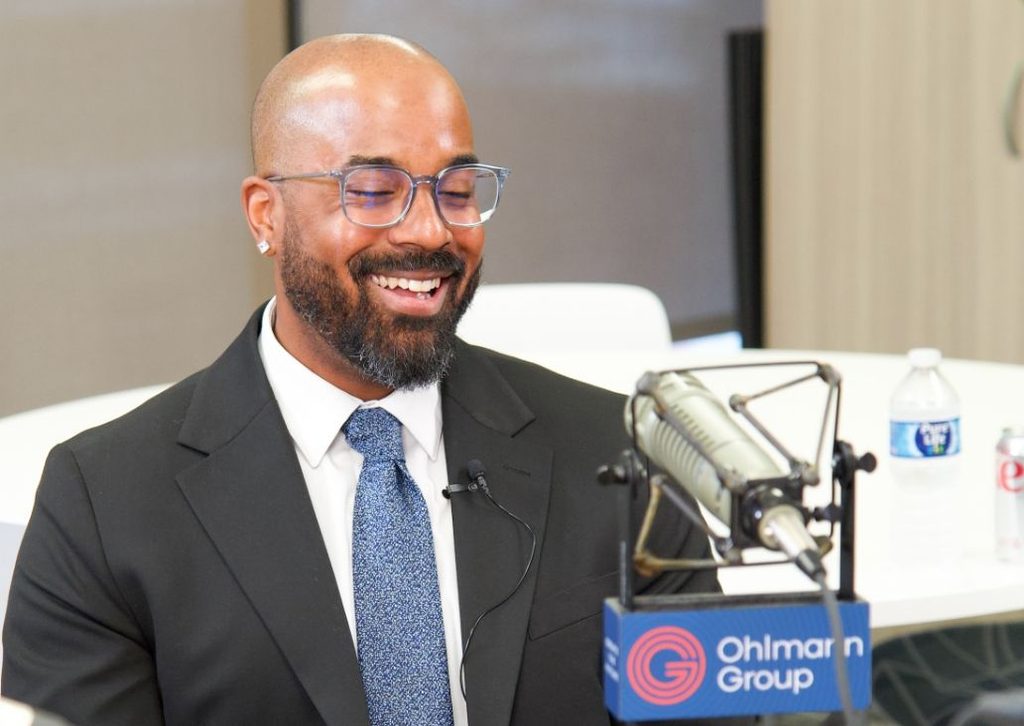
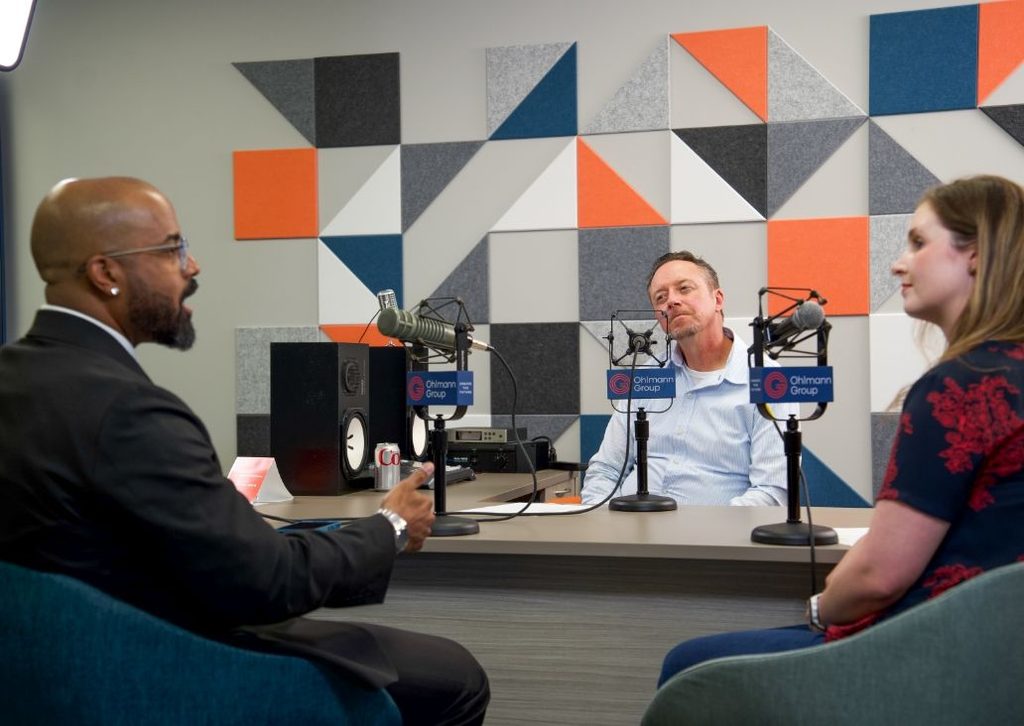
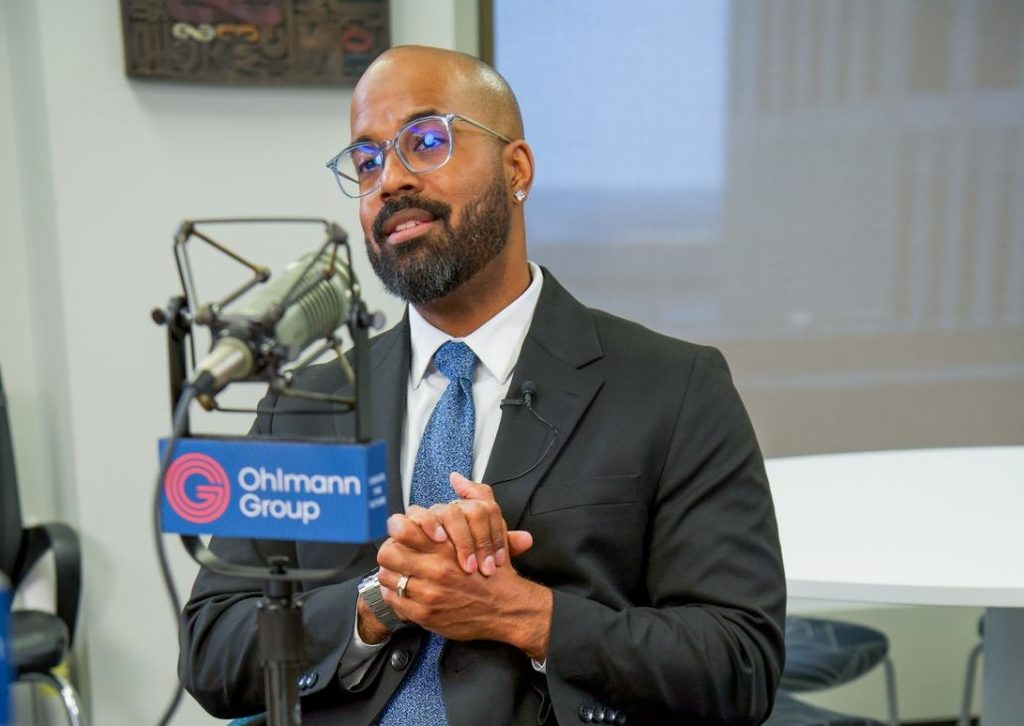
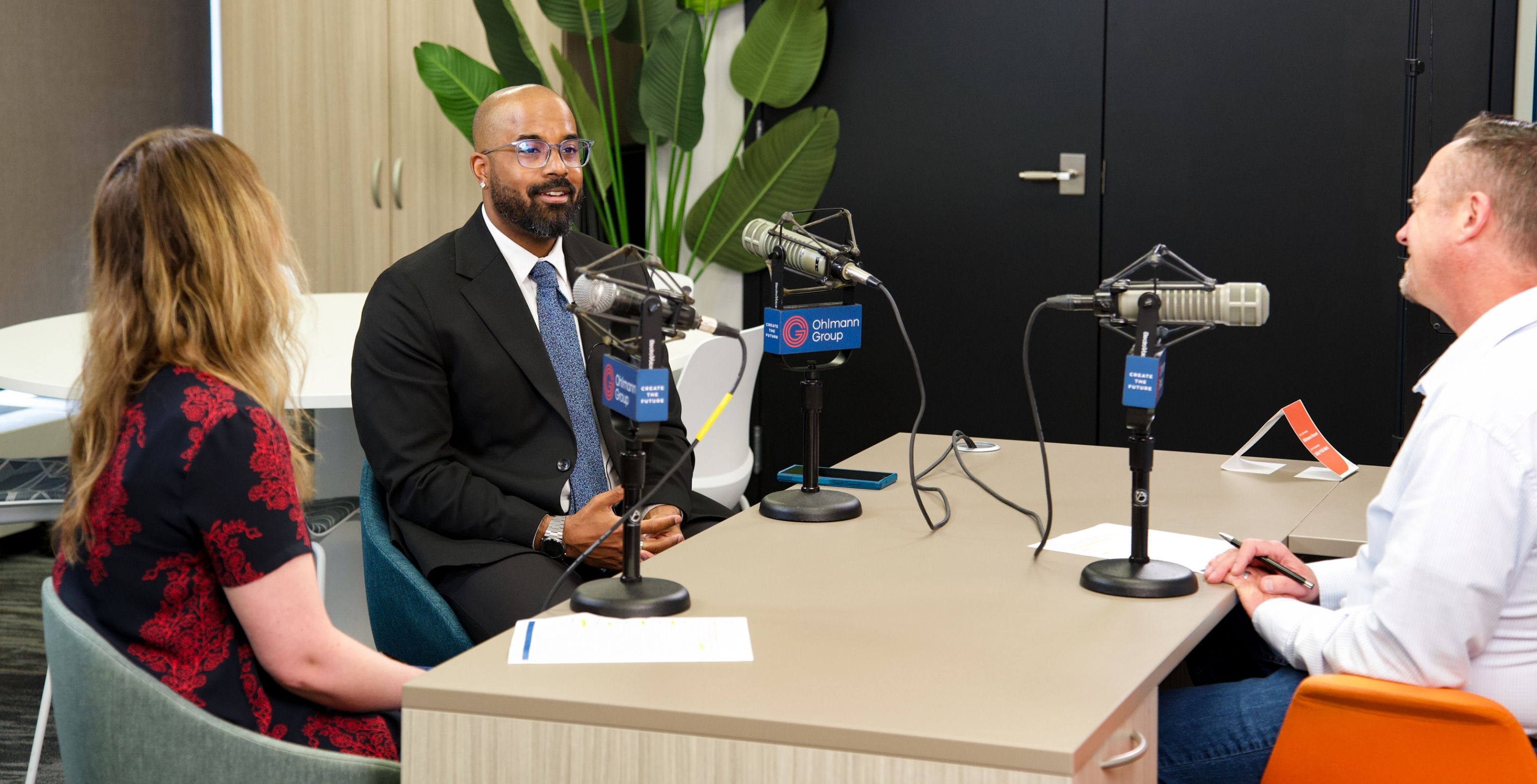
Episode Transcript:
David Bowman:
Welcome to Creating the Future. I’m David Bowman,
Evelyn Ritzi:
and I’m Evelyn Ritzi.
David:
And today we’re joined by advocate, community builder, and the founding executive director of Bottom Line Ohio, James Cosby, James, welcome to the show.
James:
Thank you. It’s a pleasure to be here.
David:
So we would love to start with you and your story. Can you tell us a little bit about your background and your career journey? How we got here today?
James:
Yeah. So my background’s mostly in education. I went to Denison University undergrad, got my master’s degree in college counseling student development from VCU, Virginia Commonwealth University. Although everyone knows VCU now because we play UD, yeah. Which wearing my VCU hat to UD games, not not the movie. I so I was a communications major undergrad, and I thought I was going to work in media like my dad did. So my first job was actually I was working. I worked for like five minutes at Huntington Bank. Realized I’m not I’m not that guy. Things are incredible. It’s it’s not wasn’t for me. I worked for WHO News Talk Radio and K99 FM doing sales, and really enjoyed it. Had a wonderful experience. You know, my dad was still a VP at Cox at the time, and so like that was fun. Like I loved sales, but I kept feeling like I felt called to do something around education, and so my mom was a teacher, then a principal, and ultimately a superintendent. And so I was like, maybe, maybe I want to get into teaching. I was a substitute for a little while. Realize now, you know what? Maybe I want to be a school counselor instead. So when I went back to school, I got my master’s in college counseling, student development. I was like, I can be a counselor at a college campus, and then maybe do K-12 someday. Ended up working housing for the next six years. I was a hall director at VCU, loved it. Ended up working in housing at University Wisconsin Parkside, Xavier University, and I thought I was going to be a housing guy forever. I was like, “Cool, I’ll be a director of housing. This is great. Met my wife, and she was like, “Yo, you got to move out of this residence hall. So that was coming into the dorms. Who knew? She didn’t want to live in the dorm. So such standards. So ended up getting into. I was in campus ministry for a year at Xavier. Then I got into financial aid and admissions. I worked at University of Dayton, Central State, and and fell in love with that work. I love higher ed. Like I think higher ed is transformational for for young people for everybody in a lot of ways. I’ll own my bias, and you’ll you’ll hear more about that soon. But I kind of hit a point where I was like, kind of in like this middle management place, assistant director, assistant manager everywhere I went, and was just looking for a different opportunity. I got blessed to meet Robin Lightcap and Dr. Deborah Brathwaite at Preschool Promise, and they’re like, “Hey, we got this part-time job. We got some money to start a scholarship program for teachers, and your experience-you seem uniquely qualified to do that, I was like, “Hey, that’s cool, but you know, I got kids. I need a full-time job, and so they made it a full-time opportunity. And so that work, that program, that was my first experience in the nonprofit space in that way, and and loved it. I had had a wonderful experience. Learned a lot about development. Got to work with just a lot of incredible leaders in that organization, and through that, Bottom Line was looking for an executive director. They had reached out to Robin. She was like, “Hey, I think I found your next job. I was like, “Oh, I don’t know. I don’t know if I should become.” Are you trying to get rid of me? But she showed me the the job posting. She’s like, “Yo, like you should. This feels like it was made for you. And so that that was how I got introduced to Bottom Line. I was fortunate enough to get an interview after what felt like 15 interviews for real. They offered me the opportunity, and that that was how how I ended up here. And so I didn’t I didn’t really see myself as like a nonprofit leader, executive director. You know, I had some aspirationally I wanted to make important decisions at work someday, and really, I had that at Preschool Promise.
I was really fortunate in that way, and and I was empowered greatly when I was at Central State too. Like I just been lucky. I’ve had a lot of good, a lot of good bosses, but this role has truly changed my life. It’s my first, more like public-facing role, for lack of a better way to put that. And the work is amazing. Like being able to help students change their lives is such a privilege. And to be able to hire and and run a business in Dayton, it’s a dream come true. Yeah, I got to see my dad be a VP at Cox. My mom was a superintendent at Trotwood. You know, I was, I just wanted to like not be an assistant director someday. Yeah. So to be executive director with with this wonderful organization and this wonderful community has been a dream come true.
David:
Well, and your father is a legend in the community, just in terms of all all that he accomplished throughout his career. Just, I mean, someone whose whose name has been spoken of well in in this building by many, and that’s not limited to Ohlmann Group. I think what’s fascinating about that too is you know that passion for working with college students, work even K 12, but then through college students. And there’s such a kind of a societal push towards linear career paths. Mine was the furthest thing from that, and to hear you tell your story as someone who’s working with these kids, hey, you know, I tried this and I did this for a little bit and I explored that and I went here and did that, and you really followed opportunity, right? As opposed to, well, I just knew here was the plan; it was all laid out, and I did it. I love that. How I mean, it’s just a great example, right? Of yeah, you know, linear linear pathing is efficient and it lessens risk. And
James:
For sure, when college is is it’s expensive, and so you know, if a student knows what they want to do, they can most efficiently go down that path. It’s just it’s really heavy to ask a 17-year-old to map out their life while while they’re still trying to figure out who they’re going to take to prom, right? And and I think that can be, you know, I think students, young people, they limit themselves if they set the path too early, and and a lot of especially the young folks that we work with, they don’t have the breadth of experience to make to even know themselves and know what they like. You know, they’re not exposed. There’s so many career paths and things they’re not exposed to that is hard for them to make the right choice, and so sometimes they get locked into a path that doesn’t feel right. And I think some of the students who don’t succeed in college, students who don’t finish, it’s not because they’re not capable, but they they’re not doing what they love because they they don’t know what that is yet. Yeah, but after a year or two, you know, especially if you if you gotta take out loans, if you’re if you’re spending money, you’ve got credits. It’s it’s hard to turn back, and and so a big piece of what we do is to help students have more clarity, and and to have make a decision For post-secondary that is not financially burdensome. Yeah, and so if they can, if they’re not taking out a bunch of loans, if they’re utilizing our incredible community colleges, they can buy themselves more flexibility without the financial risk, and and so that’s what we try to do. And and the colleges now are trying to meet students where they’re at as well, and they have more flexible paths. They have more options. And then we have students who realize, like, yo, college isn’t the move right now, but it’s making sure they have something to do. After college, yeah, it’s when you don’t have anything. That’s when we start seeing the the worst outcomes for for students, and so making sure that they have something to do when they finish high school.
Evelyn:
So let’s get into Bottom Line a little bit. We mentioned higher ed and pathways to there, but when you think about Bottom Line Ohio, you know for those who are listening may not know, what’s the elevator pitch? Who do you serve? What’s the mission?
James:
Yeah, so Bottom Line is an educational nonprofit. We’ve we’ve been in Ohio. We’re going into our fourth year. Like I’m going into our fourth, my fourth year, we’ve been serving students. We’re going into our third year. We’re a national nonprofit. We started in Boston in 1997. We partner with predominantly first-generation students, so that students who are first in their family to go to college, we help them get into college, graduate from college, and get a great first job. Our mission is to help those students find financial freedom through the transformative impact of a degree, and and for us, what that looks like in practice, we provide free one-on-one advising for that student that starts when they’re in high school, their senior year, and then that advising continues until they graduate, and then we help them get their first job. That’s like the quick, the quick elevator pitch.
David:
Yeah, and I love that. We’ve talked to Sue Edwards and we’ve talked to to so many people, but really helping that first generation student. It’s not just you know how do you do your algebra homework, right? It’s there’s so much more to it than that, and and really being there for them. So, when you think about how you’re helping students, not just get into college, but you know, be successful throughout that process, talk a little bit about what that looks like in practice.
James:
Yeah, yeah, and I guess a good place to start is actually who who are we serving, and so our students, we we want them to have a 2.3, 2.5 GPA. So we’re we’re really looking for the average student, not just the exceptional student. For for your exceptional students, there there’s lots of opportunities and scholarships. They’re they’re being communicated with in a very different way than than your average student. And what we’ve seen is your average student, regardless of high school, with a little intervention, can be incredibly successful in college. A lot of our students’ GPA is not a result of their intelligence, it’s a result of their lives. They’re working full time, trying to play sports, trying to have a social life, taking care of their family, and going to school. And so, you know, when they have a 2.3, it doesn’t mean they can’t they can’t go to college and excel. It just means that they need a little extra support, and you know the schools. We work heavy with Dayton Public Schools. Of our 300 plus students, we’re predominantly Dayton Public Schools, Springfield City Schools, Hamilton City Schools, Winton Woods. Then we partner with College Promise, Montgomery County College Promise. We’re in Northmont, Stebbins, West Carrollton, and I’m sure I forgot somebody, Catholic Central. And then we have a few students who will just apply from from different schools around the area that, if we have capacity, will serve. the The school counselors are doing so much. They’re supporting mental health. They’re pathing students. They’re putting out fires. They’re doing so many things that sometimes they don’t have the time to do that, like one-on-one college advising for for every student, and so that’s where Bottom Line comes in. We’re not replacing the staff. We work in partnership with the school counselors. Like I always tell folks, Bottom Line moves at the speed of of the school counselors and the and their support. They help us schedule with students. We meet with students during the school day. So one of the things that makes Bottom Line unique in Ohio compared even our peers, we’re I don’t know if I said this earlier. We’re in Boston, Chicago, New York, Detroit, and Houston, and then Dayton. They’re all after traditional after school programs. Most of those cities have robust public transportation. We didn’t want transportation to be a barrier here, so our advisors get to the high school in the morning, and they’re there all day meeting with students at school. So transportation is not a barrier. What that means, though, is that. My program director, Alexandria Burns, has to do an unbelievable math problem of 300 students, 14 high schools, and they each have a different bell schedule, and we have five advisors. Our caseload is we try to keep it around 65 students per advisor, so it’s difficult to to make that math work, and and we wouldn’t be able to do that without Alexandria’s incredible mind and and the support of our school counselors.
Evelyn:
There’s that connection in high school to get into college, and then once a student is in college and and maybe they’re working there too and they’re going to school and managing relationships while in college. What does that support look like then?
James:
Yeah, yeah. So at the high school level, we have we have a curriculum and so high school is very timeline driven. You know, you want to get the FAFSA in as soon as possible. Every school has their deadlines, so there’s a lot of helping students. We start. We’re actually meeting with students now over the summer, helping them make their college list. Once they make their college list, we’ll help them write their essay, do the FAFSA. FAFSA is always significant, especially lately. It’s it’s changed a lot over the last couple years, and then with the goal of having a student make an affordable college choice for our for our students, if they they’re not going to be able to transform their lives if they take out lots of debt along the way, and so you know, we we help students compare which schools are affordable, what’s the best path, which which scholarships they receive. We help them apply for scholarships. We do all that work at the high school level. Once they get into college, some of it’s the same. There’s making sure the student is pathing for their degree as efficiently as possible, and so that’s looking at helping them look at their syllabus and making sure they’re taking the right courses. You do the financial aid application every year, which feels like a common sense thing, but it also seems crazy. Like, why don’t you do the FAFSA again? It trust nothing’s changed, and so but you gotta do it every year, and and then at college it’s really helping students path, choose a major, get internships, and really think about their career, and from that point we also want to really be a mentor for the students, we have a year in high school that senior year to to work with that student to get them in. The relationship in college is is longer lasting, and so you know we we want to be the easiest answer a student can get for their question, and sometimes that answer is walking them to their office they need to go to on Rice State’s campus. Sometimes it’s talking to them about, you know, hey, like you’re you seem to be struggling in this class. If if you don’t think you’re going to pass, you need to withdraw like right now, or or it’s going to impact your GPA, your financial aid. But we also have an emergency fund. A lot of our students will commute to to save money. If they blow a tire and can’t get to class, that that is the type of event that will be the difference between a student finishing college or not. And so, we have an emergency fund to support that. We help students pay for books if they have a tuition balance. We’ll help them cover that balance to get in if we can, and in just advocating for the student, we’ve built our board in a way to to try to make those connections for students. So we’re really grateful to have Synchrony Financial on the board, AES, Danish Construction, Joyce Manufacturing. We have folks from Sinclair’s College Credit Plus on the board. My board chair is Senior VP at Sinclair, Dr. Scott Marklin, and and that was very intentional keeping those partners close. Yeah, Vanessa Ward, Reverend Ward is on our board, and you know we want to be able to support our students anywhere that we can. And all of our partners have been wonderful. If we reach out to any of our school districts from the superintendents, principals, they’ve been great. Our school presidents, their teams have been wonderful to work with. The admissions counselors at all the different colleges locally will present to our advisors, and it’s been fun. Like you know, talking about the students and the kind of professional experiences they don’t all see. They don’t. Know what colleges are around them? Like we we had we visited Antioch, and then we had they presented to the to our team, and we were able to get a student from Springfield. He’s going to go to Antioch this fall. Oh, that’s great! He never thought about that option, but you know they’re a federal work college. They’ve got lots of opportunities for affordability for students. Our students they get Flyer Promise. They there’s incredible programs at University of Dayton supporting students. We got 20 students going to University of Cincinnati.
We support students at Xavier. I think we have a couple students going to Wilberforce this year. We got some students going to Central State, and and those schools have done a wonderful job of engaging our students on the front end and and helping us make the process easy for them, and so that’s been you know those partnerships have been great. You know we can’t always say like we can’t serve students if if the student doesn’t let us, and then if our partners don’t work with us. And so, the community’s willingness to to work with Bottom Line has been wonderful.
David:
So nationally, a lot of the conversation around higher ed is centered on affordability, value, return on investment, and so from your perspective, why is earning a college degree still such a meaningful investment for many students?
James:
Yeah, you know the the data still shows that a college degree is one of the most consistent ways to improve your financial future. And so, you know, when I think about the students that we work with, when we talk about transforming their financial futures, a lot of them are experiencing poverty, and so, you know, if they can find a way to afford college, get in, finish, it’ll be, and we’ve seen it be transformational for for students. One of the points that gets said a lot, you know, if you go to college, you’ll make a million dollars more over your lifetime, and I think lifetime earnings sounds great to talk about. That is not a good sell for a 17-year-old, and so you know, for me, it’s the data that I like is the only time there’s a negative ROI for going to college is if you take out loans and you don’t finish, and the not finishing piece is huge. Only 54% of adults that start college will finish within four years. That’s a coin toss, right? And so, starting and not finishing is an adverse financial decision. The challenge with a college degree is you can go, you know, if you take out a bad car loan, like at least you got a car. You take out a loan, go to college for a little bit, and don’t finish a degree. Some college doesn’t open up collegiate jobs, jobs that require a degree, and so, you know, what we’re thinking about a lot at bottom line. It’s it’s why we don’t stop at high school. Like getting a student into college is not enough. If they don’t graduate, we failed them. And frankly, if they don’t graduate and get a good job, if they’re underemployed upon graduation, underemployment is sticky. Like they’ll be underemployed for a decade. Their wages will be depressed for a decade, and so we work really hard to to combat all those pieces. And you know what’s incredible about this community, Sinclair, Clark State, they’ve got amazing articulation agreements with our colleges. There’s so many two plus two programs to help make college affordable. A lot of our colleges now don’t require students to live on campus their first year. That’s a huge savings for the student. And there’s there’s some great scholarships for first generation college aspiring students for students that are Pell eligible. Most of our students are Pell eligible. They’ve increased Pell grant. There’s there’s a lot of opportunity there. The other piece around the kind of national discourse around college. Now that we can use Pell in some different ways, you know, when we talk about trade school and a lot of those programs, a lot of those programs are still held in institutions of higher education, and so, you know, we we were working. I say we, Alex is like right over here. We were working with a young man who wanted to become a firefighter. Well, he he need to fill the FAFSA. Because that program, that certificate program, and everything was at Sinclair, and so you know he wouldn’t track as like a traditional college student, but he still needed to be able to navigate that college process. And what we find is once students get into college, regardless of what program they’re in, Alexandria Alexandre always said, you know, there’s like unwritten rules of higher ed that first generation students, and and if you if you don’t know, you don’t know. You know, talk about a syllabus. If the first time you ever saw a syllabus was sitting in a college class, you’re probably not really going to look at it. You’re not really going to know what you’re looking at, and you’re gonna be surprised when when that first paper is due, when that first test happens. You’ll know when office hours are because what are office hours? You don’t have those with high school teachers in that way, and so it’s really helping support students to to do those pieces. Go to the offices, visit the career center, join clubs, make connections. So much of the college, so much of the value of college is is networking. My my other thought around going to college in this environment, the data still shows high income families. 90% of them still send their students to college.
They still send their kids to college, and you know I trust that rich people got rich making good financial decisions. So if they still see the value for college for their kids, I think is valuable for everybody. And so I want our students to have the same opportunities as everybody else. And that said, like it, it don’t mean college is for everyone, and and I think the same way it’s hard to create a linear path at 1718, There’s truth in that. There’s some students that are deeply ill prepared and not ready to go to college at 18 either. But like, it takes time to have that conversation with them. I think a lot of students, college doesn’t have to be a zero sum experience. You can take some classes, work. You know, we we want students to go and go full time, have that traditional college experience if possible, but I hope students understand there’s lots of ways to to get that experience to get that degree, and then I hope everybody understands if you’re 40 and thinking about a career change, you can go back to college and you can find a way and and change your life, and so you know. And I think about I love the work that we do aspirationally. I’d love to be able to work with some of our students’ parents. You know, they’re and they’re young, like they’re they’re in their 30s. You know, and they they have the capacity. They want they want opportunities. They want to do more. They maybe want career changes because we talk to them, and so you know I think I would love like a like a bottom line for for non traditional students for adults. So someday I’m saying it out loud someday, Alexandre. They’re like, nah, bro. Like for Seo, let’s let’s figure this out first. But there’s you know that that is my that’s that’s the dream, and and I think folks like college can be really intimidating. And what we also see is like so many we have students who will pass a class, a college class in high school, but they’ve never been to the campus, and so even though they’ve passed a Sinclair class, they’ve passed a class. You know, we we had a student this summer stop by the office, and he was just like, “Hey, yeah, I think I do want to go to Sinclair, but let’s let’s do they have a campus like like oh like we could walk there it’s around the corner but I understand like if you’ve never you know you see the commercials he was doing CCP at his school so he had never been there and like we have students in Dayton that have never really been on UD’s campus in that way, they’ve never visited. You know, we had we did a college visit for Wright State and Central State with Wynton Woods this year. You know that that’s that hour and 15 minute bus ride. While it doesn’t seem like a lot, it’s insurmountable for a lot of students, and so every school’s website looks great. You know, everything looks good online, but visiting and really seeing it can be transformational. And for a student who’s like, I don’t know if college is for me, if you can get them on campus and have them feel feel the energy and meet people, it. Really make an impact, and I think we’d have more students thinking about going if they had the chance to to be on these campuses.
Evelyn:
When you think about the students that you’ve helped, the first gen students, is there a particular student story or a moment when the impact of this work really resonated with you?
James:
Yeah, you know, for for me, it’s when I tell people about what we do, and usually it’s it’s a parent, it’s an older adult, and their first response is, “Man, where were y’all when I was in school? That says everything to me. We have so many students that you know we we have a star party. It’s like a graduation party for our students, and hearing the students say, “Man, I didn’t think I didn’t think I could do this. I didn’t think I could get into this school. I didn’t think we could go here. Like you know, they don’t say I changed their life because I didn’t. My the advisors did, but they’ll say like you know Kenzie changed my life, Keith changed my life, Courtney changed my life, and that’s super validating. But then for their parents to come up to me afterwards, like and they thanked me, like oh you know we didn’t we didn’t think we could afford this. We never thought our daughter could do this, or we knew we wanted this for our daughter. Y’all helped answer a lot of questions, and you know I think there’s this sense that parents aren’t doing enough. They don’t know enough. They’re not helping. We actually see the opposite. Parents are incredibly involved. Even if a parent went to college, the whole process has changed over the last 20 years. It’s changed a lot over the last 20 months, two months. July one was seismic changes, but for a parent that’s never been to college, It’s you know even as someone whose full time job is to be current on the FAFSA, on regulation, on all the things, there’s a unique. There’s always a unique situation coming up. Like, hey, yo, let me let me actually call the financial aid office with you because I need to hear the answer to this question. It takes a lot to do that. It also takes time. Like we have one family that we work with a lot. This this young woman. She graduated from Ponitz High School. She got a full ride to go to Kettering College, and she’s doing incredible. Every time we met with her, we had to meet at like weird times over the weekends because they only had one car in the family, and the whole family had to come, because you know, mom worked night. She’d get off work in the morning. She would like talk to us before she went to bed, and so grandma, all the kids were there. Everybody was there, but that’s how dedicated mom was. Even after working nights, we’re not missing the meeting with bottom line, and you know, just being able to just be some positive part of all of these family story is is a huge privilege. And you know, I was lucky. Like both my parents went to University of Virginia. I went to my I graduated from Miami Valley School. You know, I I had every advantage you could have as far as like being successful in college, and I finished efficiently in four years, got a master’s degree, did all the things, and I always felt like, you know, God gave me that privilege for a reason, and so that’s why I do this work. Like I, I know what it feels like to have all your questions answered. I could call my dad and ask him, like, “Hey, you know, I I slept through this class. What should I do? I missed this assignment. What should I do? My parents just did the FAFSA. They just did it. You know what I mean? Like they, that wasn’t new to them, and so I got to see that privilege. But I had peers at Denison through the posse program, through different programs. I was on the track team, and and we we had I had most of the black men that looked like me. They didn’t make it past Christmas break that first year, and and I wondered back then, like, yo, this school is great. We graduate like all of our students. Why is this happening? And it’s, it’s because there’s, it takes a little extra support. It takes a little extra help. And and to be clear, like the Posse program is incredible. They they did wonderful work.
But you know, when you cut the data on graduation rates around first generation students, students of color, those numbers decline, and so how do we how do we help that? And so that’s that’s why I’m excited to bring bottom line to our students, and and I’m grateful that the students want to engage. You know, we we had over 500 applications this year. I can control a lot of. Variables. The variable I can’t control is: Can you make a 16-year-old go to your presentation, fill out our like probably too long application on the website, and then show up to the meeting? You know, they don’t-they don’t have to do any of those things. I think it speaks to the students that they want opportunities. They want to have what’s best in life. They want to see if they can go to college. They want those things, and so you know I don’t see was it Gen Alpha, Gen Z. Like I, they ain’t lazy. Like they they work hard. They they want, and it’s been it’s inspiring to see, you know. I we we have students who we’ve had students who experience homelessness and like a variety of systemic factors, and to see them graduate from high school, get into college, and they’re doing great. I can’t imagine all, but how they do it. Like I, I mean, we talk to our students sometimes, and it’s like, yo, when can you meet? It’s like I’m working 40 hours at Meijer this week, and then I got football practice. You know, can we find some time on Sunday? It’s like, yeah, yeah, I think we can. I, I can’t imagine. You know, I’m tired, and I’m not doing half. You know, I’m not doing half that. You know, my daughter wants me to read to her, and I’m like, “Hey, yo, can we do Sunday? You know, it’s it’s it’s a lot, and so I’m just, I take a lot of. I’m just proud of our students, and I’m I’m proud of the team. You know, if the students didn’t trust the staff, if the schools didn’t trust the staff, if we didn’t follow through, we wouldn’t have access. You know, I I can’t meet students within Dayton Public Schools if if their leadership doesn’t let us in. Yeah, and I’m I’m so grateful for that. All of our partners, their willingness to let us in and to give us space. Our collegiate partners they they let us have offices on their campuses and they they give us gifts to give students at our events and everything like it has been just incredible to see and so I’m you know I’m grateful to be the one to to lead the work but you know our advisors are the ones in the schools having the meaningful conversations with the students and building relationships with the students. Yeah. You know, people don’t you don’t galvanize people through transactions. You know, you move people through relationships, and our advisors build incredible relationships with these students, and they do it quickly, and and to see that happen, and to see it start to happen at scale has been amazing.
David:
You mentioned your mom and and your father, and how they were helpful and influential. When you think about your life and your career, are there others who come to mind as that was just a a resource I could always count on a relentless ally, somebody that was always you know what I I I had that ability to just reach out and they would guide me.
James:
Yeah, you know it’s like I’m over here like yo who am I gonna make mad by not mentioning that? I mean, I’ve been blessed. Like my my parents were incredible. My sister’s been my biggest advocate, my biggest fan. Dara, I love you. She’s been everything to me, and my track coach, he like was my Bottom Line advisor at Denison. Coach Boor, Coach Jean Booer, he, you know, he’d be the one like, yo, you look sad. What happens? Like I got, I got dumped again, you know, or like, hey, I, I think I had a final this morning, and I was here at practice. You know he he was a huge advocate for me professionally, and I mentioned Robin Lightcap and Dr. Deborah Brathwaite, Damaris Crawford White. I worked with her at UD, and I followed her to Central State, and I’m on her board. She runs Empower now. She’s been a huge advocate, but I mean, ain’t gonna lie. Like Alexandria Burns, Emily Bratton is the leadership team that helped me start Bottom Line, and this has been the hardest but most impactful thing I’ve ever done in my life, and I wouldn’t have been able to do it without them. And so, like, it doesn’t matter what I do, the rest of my career, my life, like the two of them like trusting me and doing this work with me was like a real inflection point. And you know, I always joke like they. They manage up a lot.
David:
I can relate to that.
James:
Yeah, you know how it is. So, and and I think it’s. I’ve just been really blessed. I had a. I didn’t mention it earlier, but I had a pit stop at Enterprise Rent a Car. I ended up. I moved up to like assistant manager at the Dayton Airport. You know, you pick up things at every job, and like I told this story before, I won’t name names because I ain’t trying to like throw nobody at Enterprise under the bus. But I, I like wrecked a Rayn 1500 on my first day at work. I’ll never forget my supervisor at the time. He was like, “Hey, you know, there’s there’s no mistake you can make that we can’t overcome, but I need one. I need you. We can’t do this again, and you gotta stay focused and and keep moving. And like that was so liberating for me. Like I ain’t gonna. I thought I was fired. Like I was like, oh man, I I had one job to like not crash the car. I was pulling into a wash bay, and I don’t have good depth perception. And I, I think at this point in my life, I can just say like, I ain’t really a good driver. So luckily, we we could walk here today. Yeah, I walked today.
Yeah, working in enterprise, rent a car, and not being a good driver. Wild decision, but that, you know, that experience changed my life. Working at Central State, it was the first time in my career I had ever seen leaders that looked like me. You know, everybody from the president to my director, my peers, all looked like me. And I, and I’m in my 30s, so I didn’t think that would be that impactful in my career, but it was they saw me. I felt like they saw me in a different way. Like they saw me as the leader I could be, and I could see myself as a leader because I’m looking at leaders that look like me. Then I’ll name one more person. I ain’t talked to him in a minute, but he, when I was graduating from grad school, looking for my first hall director job, it was my second hall director job. So I was working in it at VCU. George P. Holman, he was the director of housing at University of Wisconsin Parkside, and look, I don’t know if he was gassing me up during the interview because he just needed me to take it, but like we finished the interview and he looks at me, he’s like, “You could be a director someday, and then he offered me the job and I was like, “I’m in, I’m in. At this point, I’ve interviewed a lot of places. Ain’t nobody in my career at this point said they saw me as a leader, and whether he was being honest or not, I held that close. And him saying that, just on the days where I’m like, “Oh man, I’m never gonna make impactful decisions. I’m never gonna get the keys to the car in that way. I’d be like, “Nah, you know, George saw something in me, and I, he was that dude was wild. He he like was an assistant coach at Nebraska when Lawrence Phillips was there. He’s just just a fascinating guy. I won’t get too much into it because we’re being recorded. Dude was wild and and unbelievable leader. Like he was he would like. He was very frugal, and so he would want us to like, hey yo, I want you to like shovel the sidewalk before maintenance does it, so we don’t got to pay him overtime. But he wouldn’t just ask me to do it. He would have already been out there for an hour scraping ice. You know, we’re in Kenosha, Wisconsin, and and I, I learned a lot from that. Like he didn’t just ask me to do. Can you fix this toilet? I don’t want to pay a plumber to come in. He’s already there with a plunger. Okay, you know what? I don’t mind if he’s making way more than me and he’s here. And so I really try to to live that too. Like I don’t want to ask my staff to do things that I wouldn’t do myself, and and I think it’s important to to show like even if it’s if we’re doing something after hours or doing something on the weekends, I try to show up because I don’t want this team to think I’m gonna make y’all work on the weekends, but I’m cool. And then I think that you know I don’t know. There’s like a term for it that I’m I’m missing right now, but I think that type of leadership is important, and I’ve been blessed to see that in so much of my career, and and it’s just been I I call it luck. Like I so many people who have said to me, if you ever need anything, let me know. I’ve called on a lot of that, especially since I got this job, and for the most part, people have followed through, and I thank God for that every day. You know, it’s that’s always the fear. Somebody says like, “Yo, if you need anything, hit me up. Then you call them; they don’t answer. People respond. People have help. You know, there’s starting a non. Profit in Dayton, and then I use starting Lucy like Bottom Line exists, bringing Bottom Line to Dayton, but you know building credibility in the community and all that. It wasn’t just me, you know, and you know Emily, she did an amazing job letting people know who we are, and then Alexandria did an incredible job having us follow through on the promises that we’re making to students and to our partners, and and through all of that, you know, we’ve we’re now building credibility, and and we’re thinking about like what is our footprint going to be? What’s what’s expansion look like? What does Bottom Line look like in five years? And so I don’t have I don’t fully have the answer to that question yet, but we’re but we’re working on it, and and we’re in a good place to to figure all that out.
Evelyn:
What’s amazing, right? It only takes one person to see you and believe in you and model the way to really make a difference in your life. If anyone’s listening and and they’re interested in in getting involved in this mission, whether as a volunteer or supporter, partner in the community, employer. How might someone be able to get involved with the mission of Bottom Line Ohio?
James:
Yeah, you know I I feel like I have to say if you if you go to our website bottomline.org/donate, you can make a donation. You know, for us we have we do care packages for students, so we always need volunteers to help us with the care packages. And as we’re like scaling up and getting more students, it takes more hands to do that than ever. We always need support preparing for events, and we’re gonna roll this out again this fall for our students who are at Sinclair. My board will mentor. They have the opportunity to mentor those students and provide an extra layer of support, and and really looking for community partners to do that as well. And so, I’ve talked to a couple folks about it this summer, who are like the first non-board members to be involved in that program. But once students are back in school in the fall, I’ll circle back to folks. But there’s opportunities, and you know our especially our first year Sinclair students who haven’t chosen a major, they’re the students who who I think are most at risk for not finishing that two years, not transferring to the four year, and and so there’s a real opportunity there, and I think for those students, it’s really impactful to have somebody who who has who’s had a career and can talk about their jobs. Like I love our advisors, but they’re young, you know. They’re they’re for a lot of them, it’s their first or second job, and so you know, having an experienced professional get talking to our students about their careers. There’s opportunities there, and and we can we can get creative and and find a way. You know, that’s one of the fun parts about this work is folks will have an idea to to support to be helpful, and so yeah, you know the the best way. I’m trying to get better at LinkedIn. If you’ve sent me a LinkedIn message in the last like two years, I apologize. I’m very behind. Email me at jcosby@bottomline.org. You can shoot me a text message 937-838-1235. I feel like I’m Mike Jones right now, saying my phone number. But that’s that’s like the best way to to get a response from me. I’m trying to keep up with everything, and you know, if you we’re we’re in the high schools, and so you know we’re we’re at Northmont, we’re in all the Dayton Public High Schools. You know, find find the advisor. Like we’re there. You should be able to ask your school counselor, and they can get in touch with us too. But yeah, we’re on the eighth floor of Talbot Tower. You know, park in the garage will validate your parking. Come say hi, and that’s been a wonderful place to be as well. Like we’re walking distance for our Sinclair students. Our UD students are close. A lot of our Dayton Public students are close, and and it’s in a central location. It’s been a wonderful, wonderful place to be, but yeah.
David:
Well, we have one final question, and we ask this of all of our guests: What’s the future that you want to create?
James:
You know, on a on a high level, I just want everybody to have educational access and healthcare, I ain’t a policy expert. I can’t tell you how to get there, and I’m and I’m realistically not the person to to create that. You know, I don’t view myself as a visionary or a. Someone to create things in that way. I see myself as someone. I want to empower people who will be the folks that change the world. You know, I I probably ain’t gonna change the world. Like I I can raise you some money. I can I think I hire pretty good. What I am able to do is to help motivate people to to find their truth, their best self, and to do the things that they want to do. And so, when I think about kind of how I want to change the world, you know, I hope I hope one of these Bottom Line graduates who’s touched this program? Who has in some way been been in my orbit, my team’s orbit? They they change the world, and and they will. You know, we man talking to these students like they’re they’re aware, they know what’s happening in the world, and they’ve got ambitions, they got ideas, and I’m I’m excited to to see when they get involved, and so that that’s really, you know, I I think about when you ask that question. I think about my mom a lot, you know. As a she was a superintendent at Mount Healthy, she was a superintendent at Trotwood. There’s people who they’ll see my last name, and they remember from when she was at Kaiser, when she was teaching, you know, 20 years ago, 30 years ago, because my mom’s only 32 years old, you know, so it’s like seeing that impact. I’m always amazed. There’s students who remember me from when I was a hall director, and will find me like, “Oh, you made such a big impact, and so I just think a lot about. I just want to have as many positive interactions I can have with folks, and and hope that that will be the front end of some of some big changes in the world that that we all want to see.
David:
That’s beautiful. You’re creating the creators, which is that’s beautiful. Well, thank you so much for being our guest today. It’s been our pleasure.
James:
I appreciate the opportunity, and I appreciate thank you for coming to our keynote. I was lucky enough to speak at the African American Community Fund, and you know the keynote was good enough to give me a podcast interview, so this is like the the best speech I have ever given. So, just grateful for the opportunity, y’all. Y’all do incredible work. You know, Ohlmann Group is legendary in Dayton, and so like it’s it’s an honor to be here, and and thank you for giving people the opportunity to learn about Bottom Line and the impact that we make on students. Thanks so much.